
Amaryllis care: how to get it blooming for Christmas
It takes six to eight weeks from planting to flowers. If you want it in bloom for Christmas, early November is the time to start.
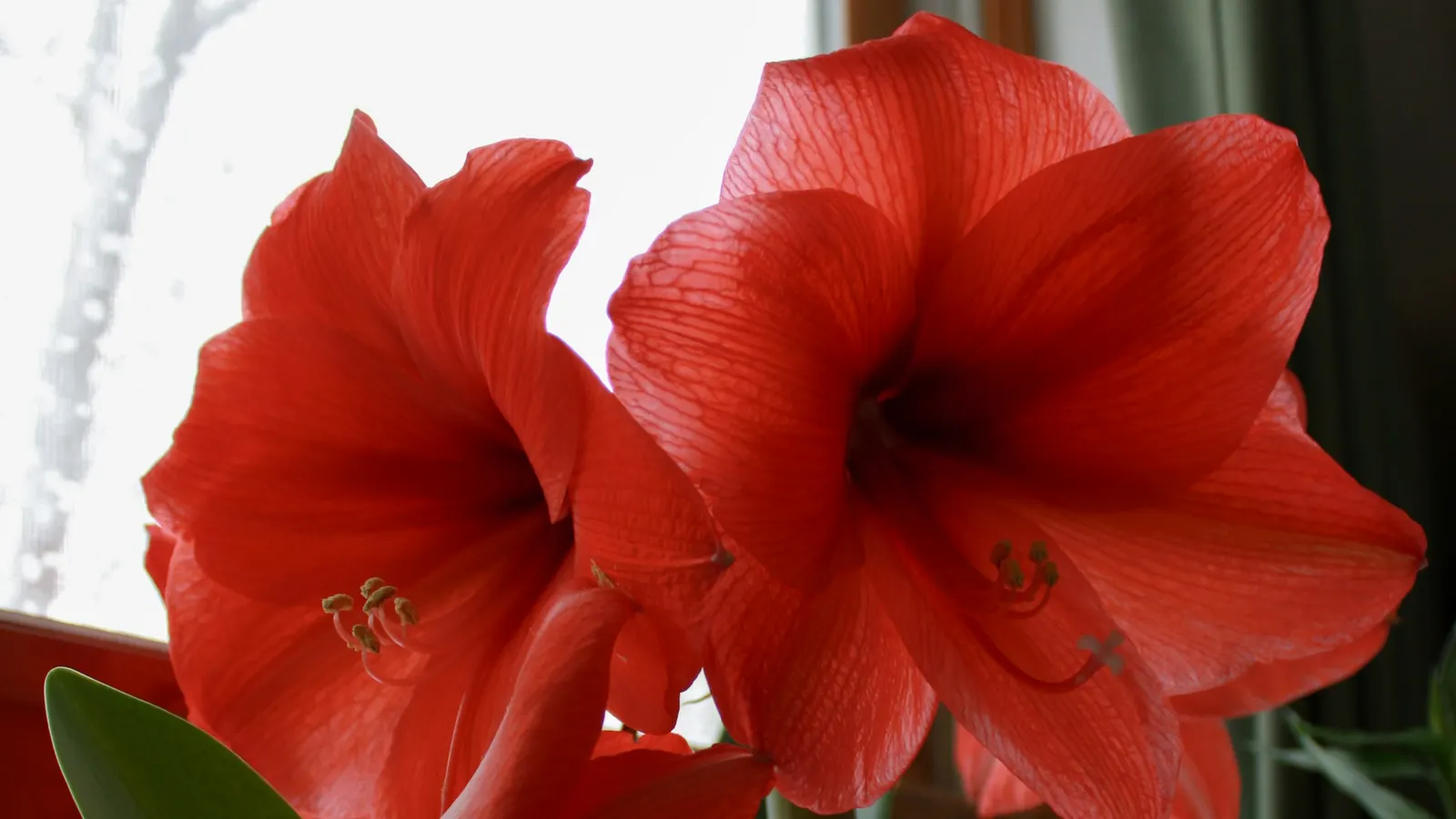
Amaryllis, which botanists call Hippeastrum, shows up in shops in November as a bare bulb, already potted or in a gift box.
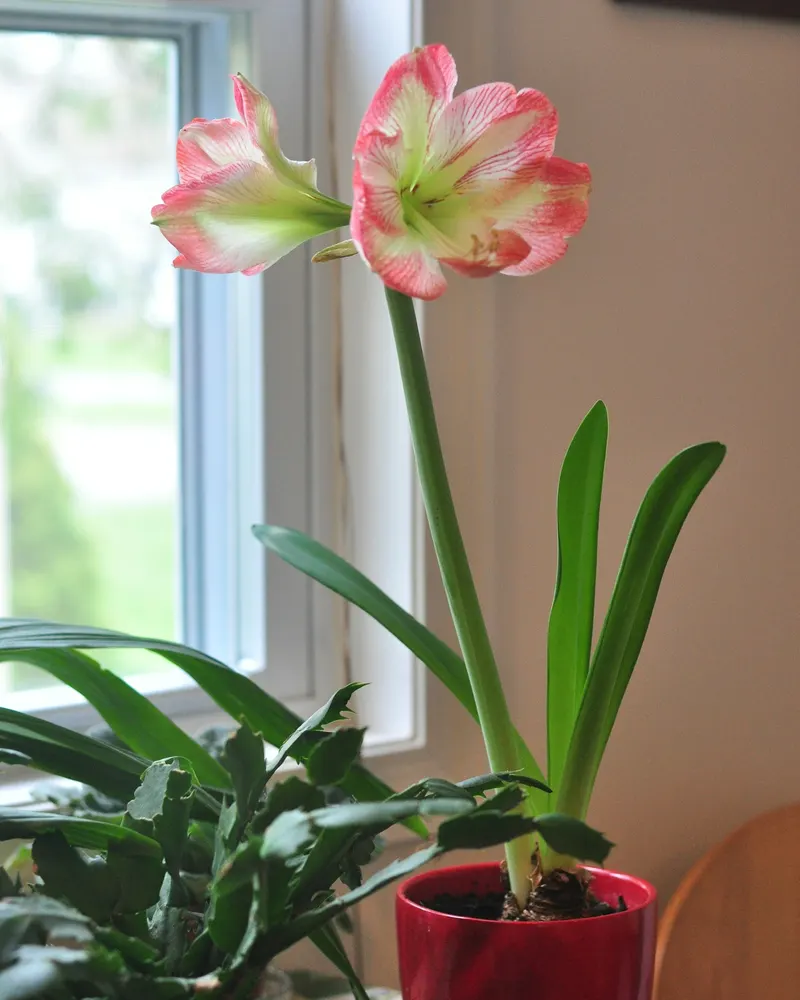
A big bulb sends up a thick stalk with several huge flowers, and all it needs for that is a pot, light and a bit of water.
People mostly ask two things: when to plant it so it flowers at Christmas, and why next year it grows nothing but leaves. Both have fairly simple answers.
When to plant amaryllis for Christmas
The RHS and the University of Wisconsin both say it takes about six to eight weeks from planting to flowering. If you want flowers on Christmas Eve, plant the bulb by early November at the latest.
Missed it? No problem. The RHS says bulbs can be planted from October right through January, so a later bulb will simply flower in January or February.
If you buy several bulbs, plant them two or three weeks apart. They'll then flower one after another instead of all at once.
When buying, pick the biggest, firmest bulb you can find. University sources agree that a larger bulb has more stored energy and so more flowers.
How to plant it, step by step
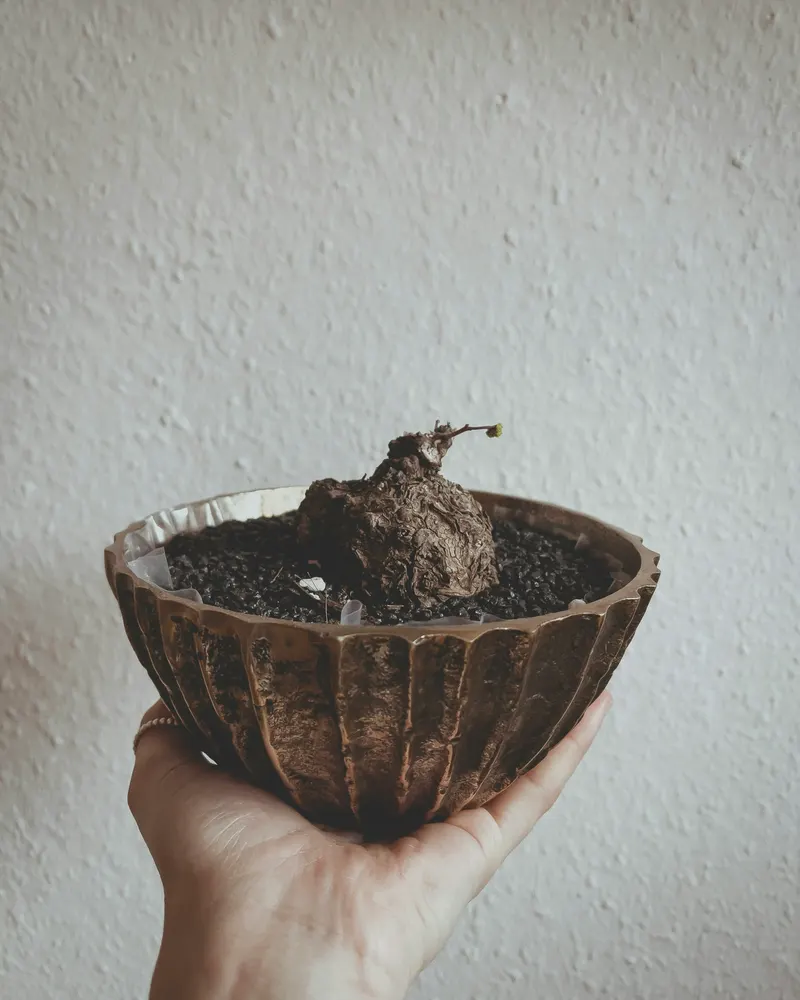
Pot and compost
The pot only needs to be slightly wider than the bulb itself. The RHS says just a little wider, while Penn State and Illinois Extension give about 2.5 to 5 cm (1 to 2 inches) more in diameter.
It should have a drainage hole. Ordinary houseplant compost is fine.
How deep
Don't bury the whole bulb. The RHS says to leave about two thirds of it above the surface, American universities say a third to a half.
Penn State adds that keeping the top of the bulb uncovered helps prevent fungal disease. A safe middle ground: plant it so at least half of the bulb sticks out.
The first weeks
Put it somewhere bright at around 21 °C, as the RHS suggests. Water only sparingly until leaves or the flower stalk appear.
After that water regularly so the compost doesn't dry out, but don't let water sit in the saucer. The University of Wisconsin warns that the bulb rots in soil that stays wet.
How to make the flowers last longer
Once the flowers open, move it somewhere cooler. The RHS recommends 15 to 18 °C, and the University of Wisconsin says much the same, 15 to 18 °C and out of direct sun.
A spot right above a radiator is a bad idea. In the warmth the flowers fade quickly.
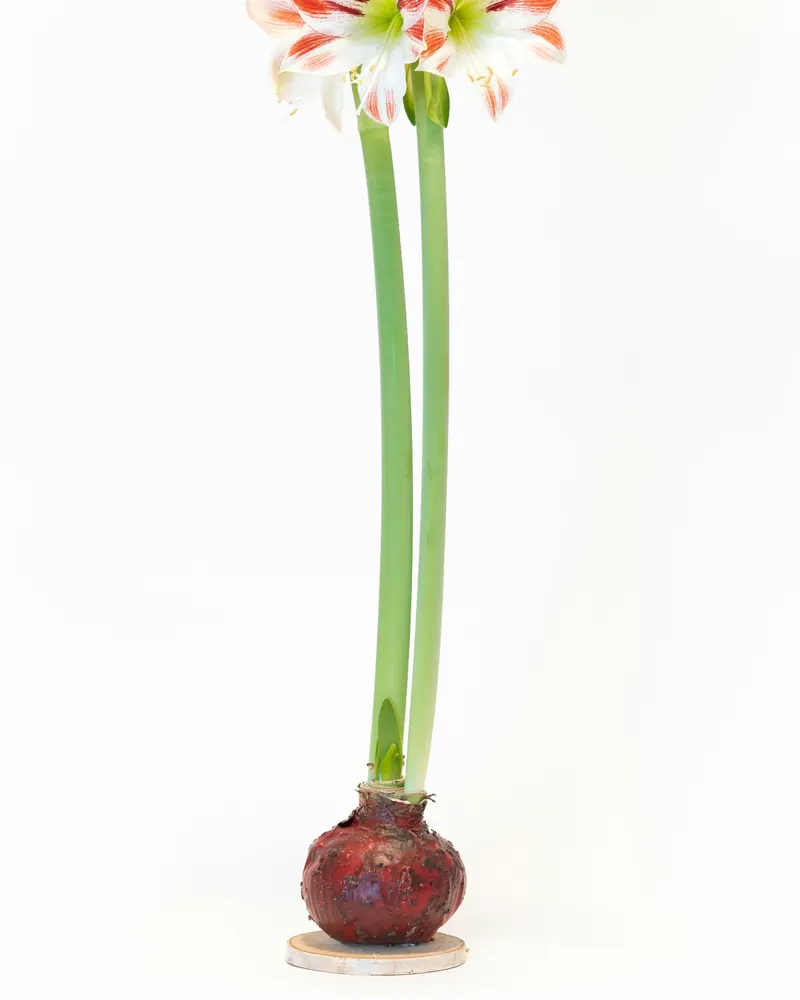
Amaryllis in a vase of water
You'll also find bulbs sold in vases of water. Clemson University advises keeping the water level about 2.5 cm (1 inch) below the bulb, with the top third of the bulb showing.
According to Clemson, these bulbs won't flower again in water. After flowering you can throw them away, or pot them in soil and carry on as with a normal amaryllis.
Why your amaryllis isn't blooming and only has leaves
This is the most common problem, and it usually comes down to how the plant was looked after once it finished flowering. University sources from Florida, Wisconsin and Penn State list these causes:
- Not enough energy in the bulb. The leaves are what recharge the bulb. Cut them off after flowering or leave the plant in a dark corner and the bulb has nothing to build a flower from.
- Seed pods. If you leave the spent flowers on the stalk, the plant puts its energy into seeds instead of next year's flowers.
- A small bulb. Small offsets need time. According to the University of Florida, they usually flower within two years if they are at least a quarter to a third the size of the mother bulb.
- Too much nitrogen or water. Heavy feeding and overwatering push leaves at the expense of flowers.
- No rest period. Sources disagree on this one, more below.
How to get it to bloom again
After flowering
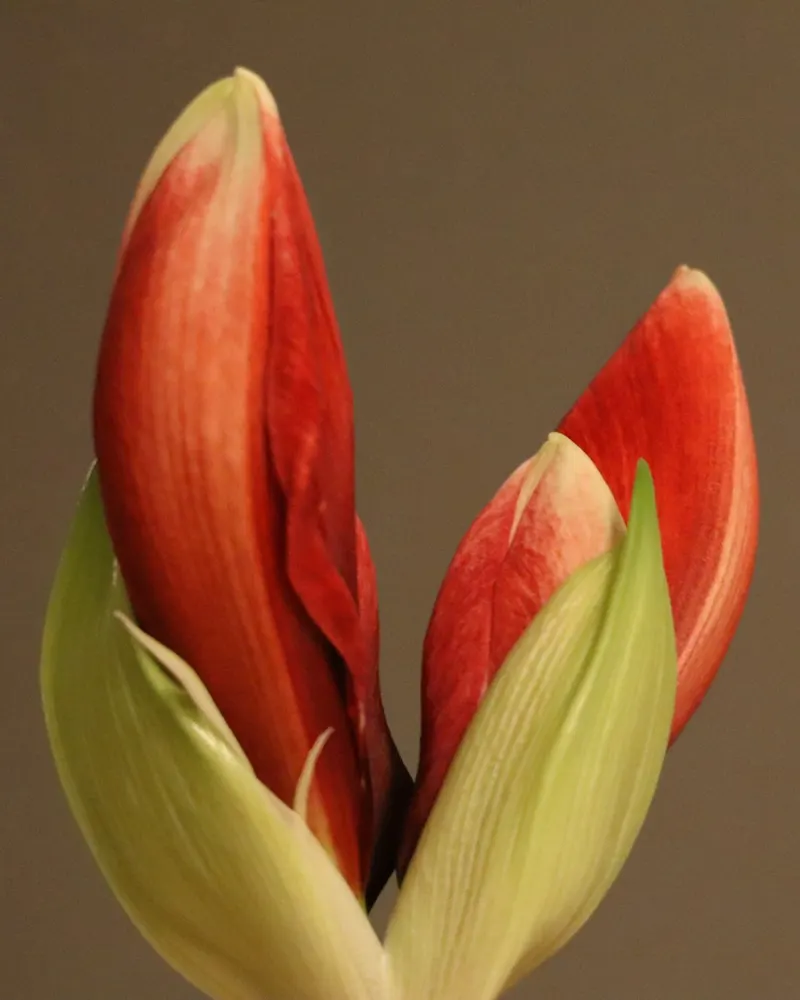
Cut off the spent flowers so it doesn't set seed. Penn State says to remove the stalk only once it turns yellow. Leave the leaves. The University of Wisconsin stresses that the bulb has to keep growing after flowering or it won't bloom again.
Keep it as bright as you can and feed it with houseplant fertiliser. How often is where universities differ: Wisconsin says monthly, Illinois every three weeks, Penn State twice a month. Normal houseplant fertiliser at the dose on the label is enough, no more.
You can put it outside for the summer. Wisconsin says to wait until the last frost has passed, start it in shade and then gradually move it to a spot with at least six hours of sun. Bring it back in before the first frost.
A rest in autumn
Sources disagree here. Even articles from the University of Illinois disagree: one says amaryllis needs a rest to set flowers, another says it doesn't.
The University of Wisconsin says commercially sold bulbs don't strictly need one and will flower even if kept green. A rest does help you time when it flowers, though.
If you want flowers for Christmas, do this:
- RHS: in late September move it somewhere cooler, around 13 °C, for 8 to 10 weeks and cut back on watering and feeding. The alternative is to let it dry out and store it somewhere cool for one to two months.
- University of Illinois: a cool, dry place at 7 to 13 °C for 8 to 12 weeks, with no watering at all during that time. Flowers usually appear about 4 to 6 weeks after the rest.
When a new shoot appears on the bulb, move it into the light and start watering again. According to the RHS it only needs repotting every two or three years, between January and March after flowering. You'll find how in How to repot houseplants.
Is amaryllis toxic to cats and dogs?
Yes. The ASPCA lists it as toxic to cats, dogs and horses. It contains lycorine and other compounds, and poisoning can show up as vomiting, diarrhoea, abdominal pain, drooling, loss of appetite and tremors.
If you have an animal that chews plants, keep it out of reach. For safer options see Houseplants safe for cats and dogs.
Sources
- RHS: Hippeastrum growing guide
- University of Wisconsin Extension: Amaryllis, Hippeastrum
- University of Wisconsin Extension: Forcing Bulbs
- University of Illinois Extension: How to take care of amaryllis and get them to rebloom
- University of Illinois Extension: Colorful amaryllis to brighten up your colorless winter days
- University of Illinois Extension: Grow or gift an amaryllis for a winter gardening experience
- Penn State Extension: Amaryllis
- University of Florida IFAS: Amaryllis
- Clemson University HGIC: Amaryllis
- ASPCA: Amaryllis