
Living Christmas tree in a pot: how to keep it alive
A potted Christmas tree survives if it spends as little time in the warmth as possible. How long, how to water it, and what to do in January.
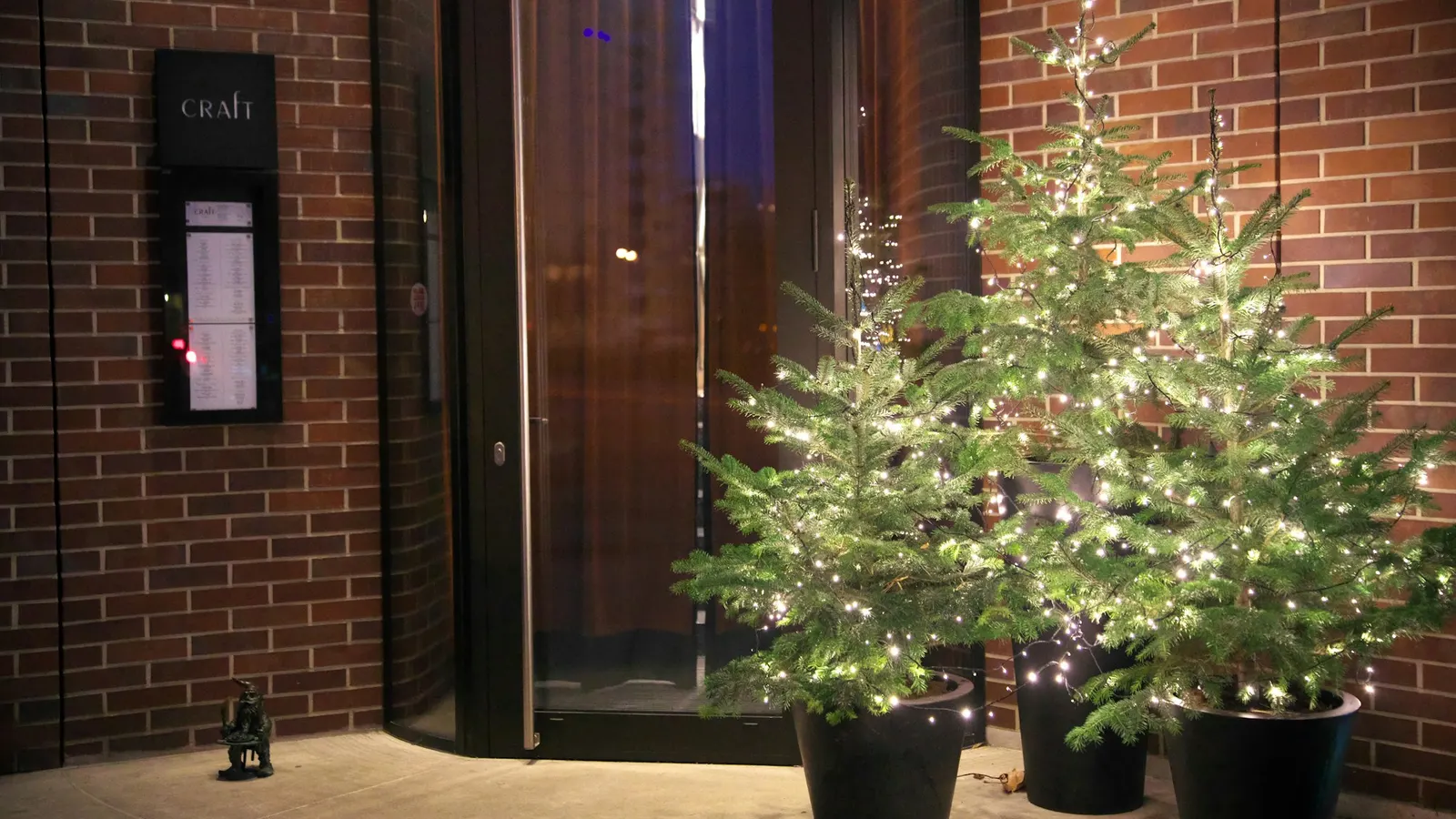
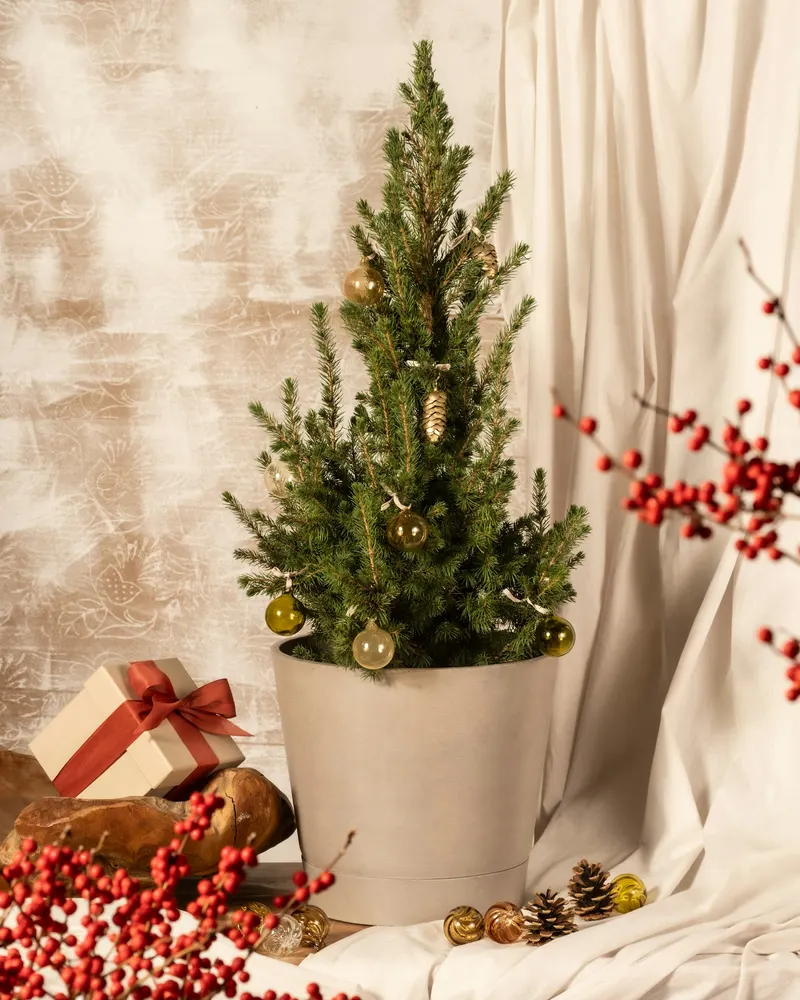
A living Christmas tree in a pot sounds like the perfect plan: decorate a real tree for Christmas, plant it in the garden in spring. For that to work, it mainly needs one thing: as little time in the warmth as possible.
A conifer is dormant in winter. Washington State University says the longer the tree stays indoors, the more it adjusts to the warmth and the lower its chances of survival. Here's the routine that university extension services and the RHS agree on, and where they don't.
Check the roots when you buy
Shops sell two kinds of potted trees. The RHS separates them like this: some were grown in the pot, others were dug up with their roots and just put into a pot. For planting out after Christmas, the RHS recommends the ones grown in the pot.
Clemson University suggests checking:
- Roots. In a container-grown tree they should be moist and not wound tightly around the pot. If the root ball is wrapped in burlap, it should be firm. A loose or flattened ball, Clemson says, is unlikely to survive.
- Needles. Good colour and flexible branches. Skip trees with brown tips, yellowing, or needles falling off.
The species matters too. The RHS says Norway spruce drops its needles quickly, blue spruce holds them better, and Nordmann fir is very slow to drop them. Washington State University adds that the younger the tree, the better it copes with going outside, inside and out again.
How many days it can stay indoors
This is where the sources differ most:
| Source | Longest time indoors |
|---|---|
| University of Missouri | 3 to 5 days |
| Illinois Extension | 4 to 5 days |
| Penn State Extension | 4 to 5 days ideally, no more than a week |
| Clemson University, Washington State University | 7 to 10 days |
| RHS | no more than 12 days |
Illinois Extension explains why: after too long in the warmth, the tree can start to break dormancy and begin growing indoors.
If you want the tree to survive, stick to the shorter end. Washington State University mentions families who bring the tree in on Christmas Eve and take it out on New Year's Day. The RHS also says to watch the tree itself: if it looks unhappy, put it back outside early.
Keep it outside until you bring it in
If you buy it early, don't put it in the living room until Christmas. Keep it outside or somewhere cold:
- Penn State Extension suggests a garage, shed or sheltered outdoor spot for 1 to 2 weeks.
- Illinois Extension recommends keeping it outside until just before Christmas, in the shade or on the north side of the house, out of direct sun.
- The RHS says the weekend before Christmas is the ideal time to bring it in.
Even outside, the soil has to stay moist. Washington State University says to water it as soon as you get it home and keep it damp until it's planted.
Caring for it over the holidays
1. Pick the coolest spot
The RHS recommends displaying a living tree in a cool room. Heat from a radiator or fire, according to the RHS, causes moisture loss and needle drop. The University of Missouri adds heating vents, stoves and any hot appliance. Why winter air indoors is hard on plants in general is covered in Houseplant care in winter.
2. Check the moisture every day
Indoor air is drier and the soil in a pot dries out fast. Penn State and Illinois Extension both say to check it daily. The soil should be moist, but the tree must not sit in water.
Illinois Extension suggests putting a large saucer under the pot and watering evenly, just until a little water collects in the saucer. Clemson University mentions crushed ice on top of the root ball, which melts slowly. The University of Missouri notes that covering the soil surface with plastic slows drying.
3. Go easy on the lights
Penn State, Clemson and the University of Missouri all recommend LEDs or other lights that stay cool. Washington State University goes further: ideally no lights at all, and if you do use them, small LEDs and fewer ornaments.
4. Don't feed it
No fertiliser in winter. Clemson University says to wait until spring, once the tree is planted outside.
After the holidays: back out and into the ground
Don't carry the tree straight from a warm room into the frost. Washington State University says to keep it in a protected outdoor spot for at least a week so it can go dormant again. Penn State and Clemson mention several days somewhere cooler.
If you have a garden, prepare now:
- Dig the hole in advance. The University of Missouri suggests digging it before the holidays, before the ground freezes. Keep the soil for backfilling somewhere it won't freeze.
- Cover the spot with straw. Illinois Extension recommends 15 to 20 cm of straw so the ground doesn't freeze deeply.
- Think about size. According to Illinois Extension, an ordinary conifer, unless it's a dwarf variety, can easily reach about 10 metres tall, with lower branches 3.5 to 4.5 metres wide.
When you plant it:
- The hole should be as deep as the root ball. On width, sources differ: Penn State says 30 to 60 cm wider than the ball, Clemson at least twice as wide. Clemson warns that planting too deep can kill the tree.
- Remove the pot, and cut and loosen any roots circling the ball. That's Clemson's advice.
- Water well and mulch, 5 to 8 cm according to Clemson.
- Plant during a mild spell. The University of Missouri says to wait for a break in the cold. If the root ball has frozen, let it thaw slowly in a cool room.
No garden?
You can keep the tree in its pot and use it again next year. The RHS suggests moving it into a bigger pot every year, up to about 45 cm in diameter and depth, and keeping it outside in a sunny spot and well watered. How to repot is covered in How to repot houseplants.
To be honest about it: the RHS adds that conifers in pots often live only a few years, because they aren't suited to permanent pot life. If you have nowhere to plant it, Washington State University suggests deciding before you buy who you'll give it to, such as a school or the local council.
Cats and dogs
Penn State Extension says the needles of a fresh Christmas tree are not likely to harm a pet. The ASPCA's main concern is that the tree is firmly secured and can't fall on an animal. The ASPCA also warns that standing tree water is a breeding ground for bacteria that can cause nausea and diarrhoea, so keep the saucer out of your pets' reach.
Sources
- RHS: Christmas trees: types and care
- Penn State Extension: Caring for a Living Christmas Tree
- Illinois Extension: Living Christmas Tree Care Guide
- University of Missouri IPM: Living Christmas tree
- Clemson University HGIC: Living Christmas Trees
- Washington State University Extension: Living Christmas Trees
- Penn State Extension: Holiday Plants and Pets
- ASPCA: Don't Let These 10 Holiday Pet Hazards Ruin Your Holiday Spirit