
Phalaenopsis orchid care for beginners
Water by soaking, bark instead of soil, roots that grow out of the pot, and the cooler nights that set off a new flower spike.
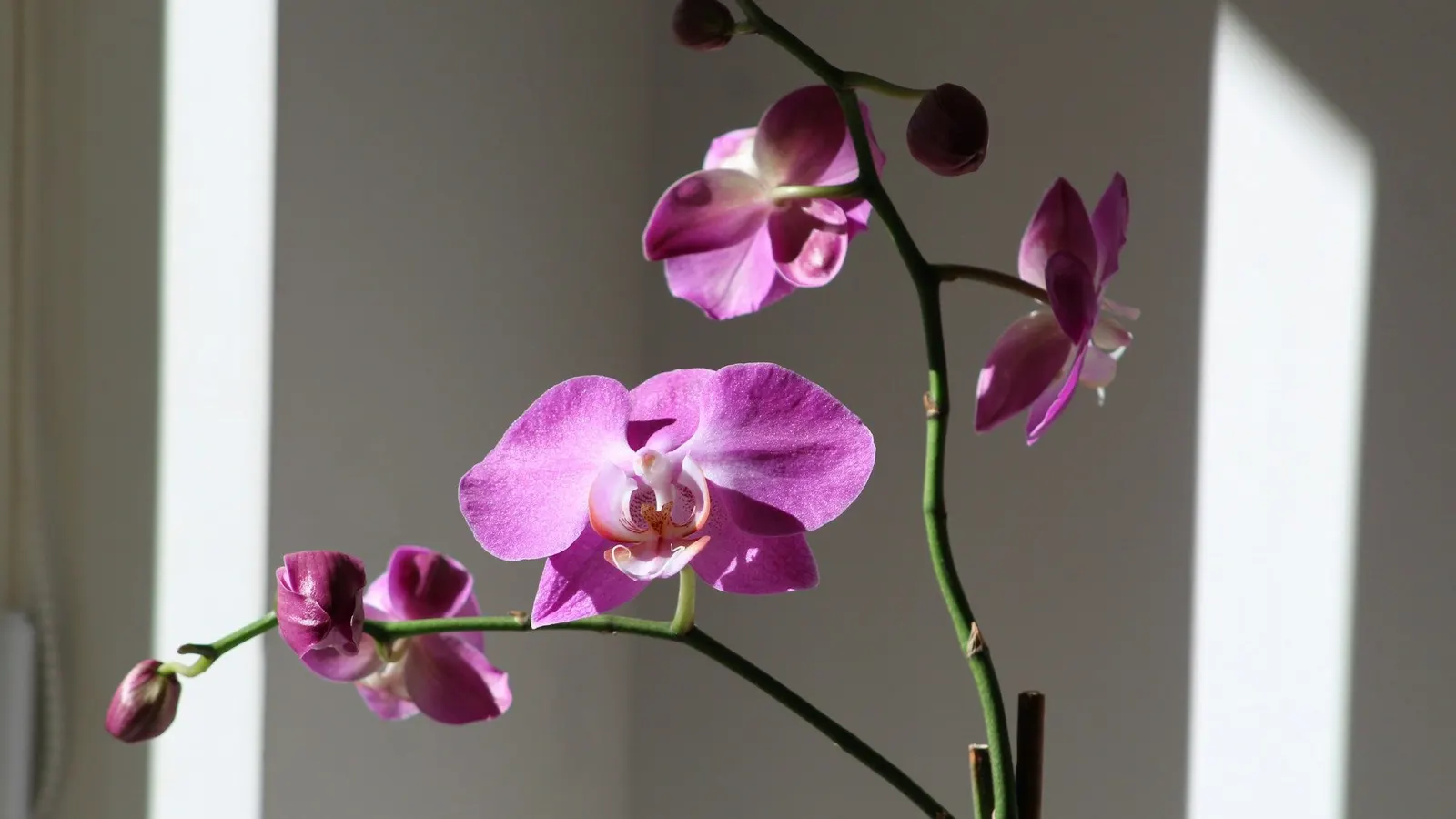
When someone in Slovakia says "orchid", they almost always mean Phalaenopsis, the moth orchid. It's in every supermarket, it's a standard birthday present and it flowers for weeks.
The trouble starts once the flowers drop: a lot of people either drown it or keep it for years just for the leaves.
It isn't a difficult plant. It simply grows differently from most houseplants. In the wild it doesn't grow in the ground but clings to tree bark, and nearly everything about its care follows from that.
Where to put it
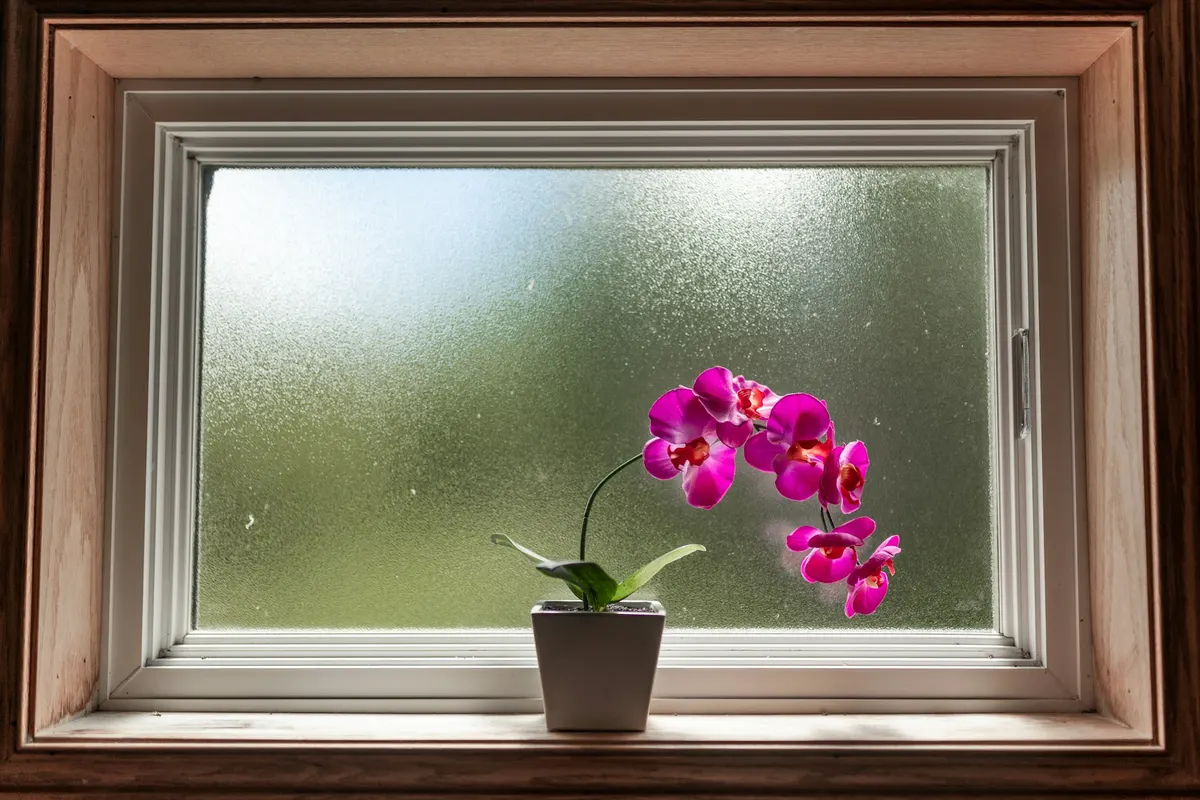
Phalaenopsis wants plenty of light but not direct sun. The Royal Horticultural Society (RHS) recommends an east or west facing window.
In summer, keep it out of direct sun, which scorches the leaves. In winter, when the sun is weak, give it the brightest spot you have, because good light helps it flower.
Keep it away from radiators and draughts, the RHS says, and in winter watch out for cold glass if the leaves reach the window.
Watering by soaking
Bark holds water differently from soil. If you just pour a little on top, it runs through quickly and the bark doesn't take up much. That's why a lot of people water orchids by soaking:
- Take the orchid in its clear plastic pot out of the decorative outer pot.
- Sit the pot in a bowl of lukewarm water so the bark soaks it up.
- Lift it out and let it drain properly.
- Only then put it back, and check that no water is pooling at the bottom.
The RHS lists three ways to do it: water from above and let it drain, hold the pot under a gently running tap, or stand it in a bowl of water and then drain it thoroughly.
Two rules apply to all of them: don't let the roots dry out completely, and never leave the plant sitting in water.
How often? With bark, once a week is usually enough, according to Clemson University. It needs more in summer and less in winter.
The New York Botanical Garden (NYBG) suggests watering when the mix has almost dried out, checking with a finger about an inch (2.5 cm) down. Water in the morning, with tepid water.
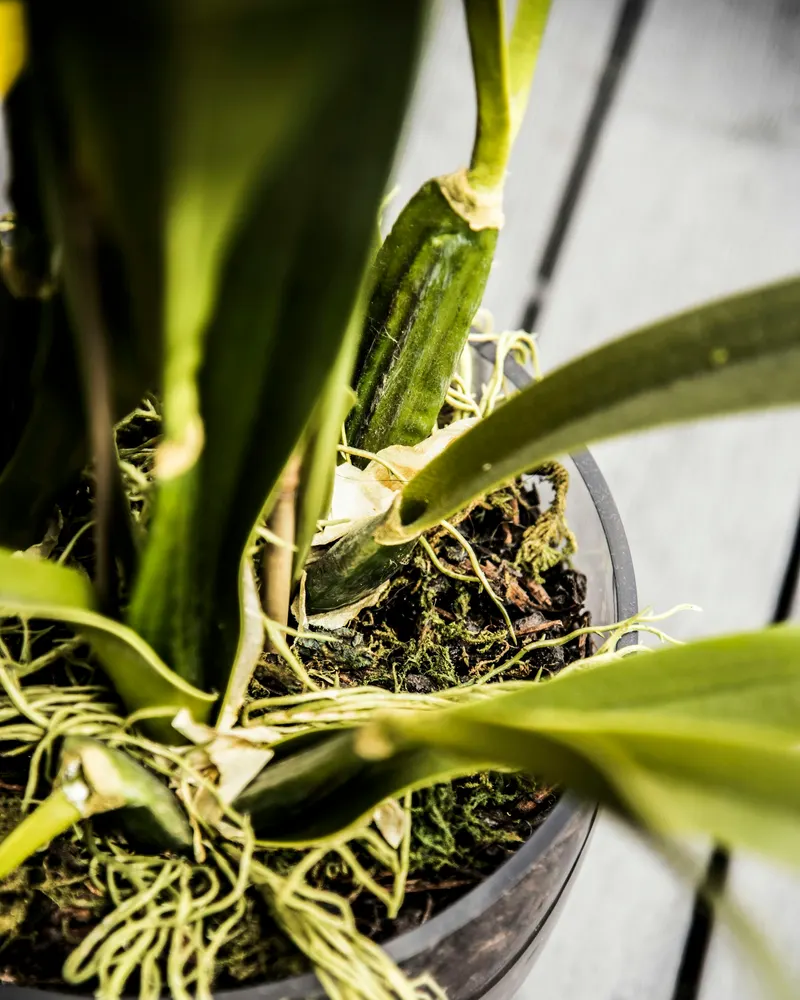
A clear pot really helps here. The RHS recommends one so you can see the roots. Healthy roots are plump, firm and silvery-white. Brown, mushy roots are rotting, which usually means too much water.
For general tips on checking whether a plant needs water, see How to tell when your houseplant needs water.
Bark, not soil
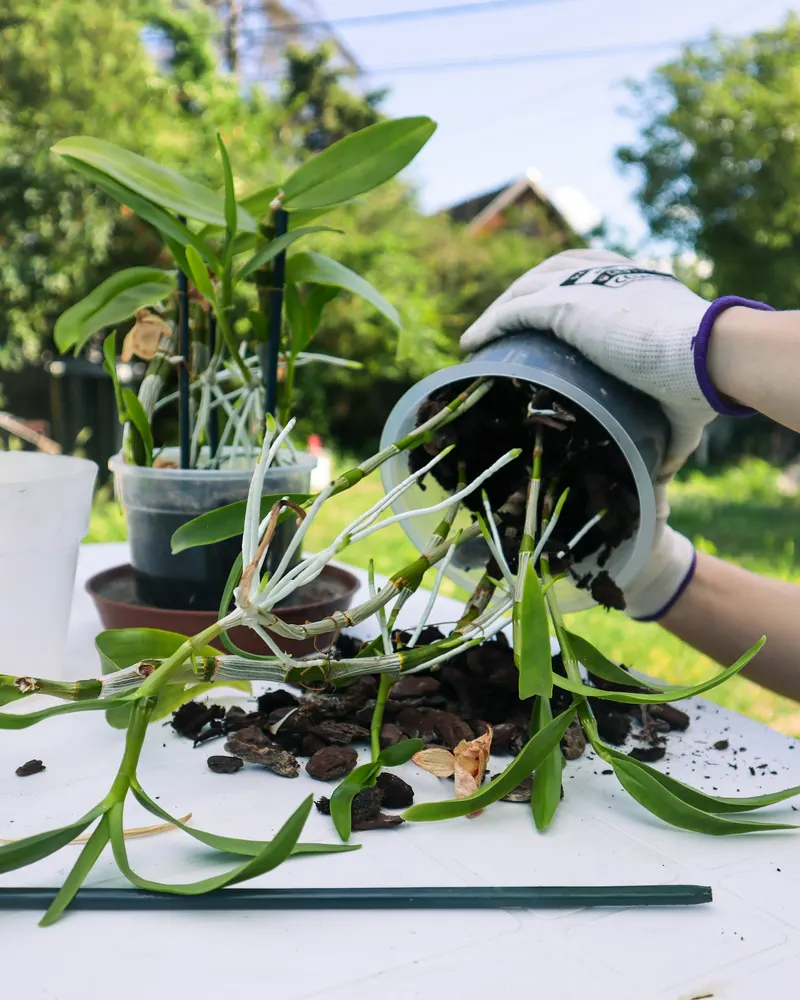
Phalaenopsis needs a bark-based orchid mix. The RHS warns that regular multipurpose or loam-based compost will kill it, because the roots can't get air. When you repot, buy a bag of orchid mix.
Aerial roots are fine
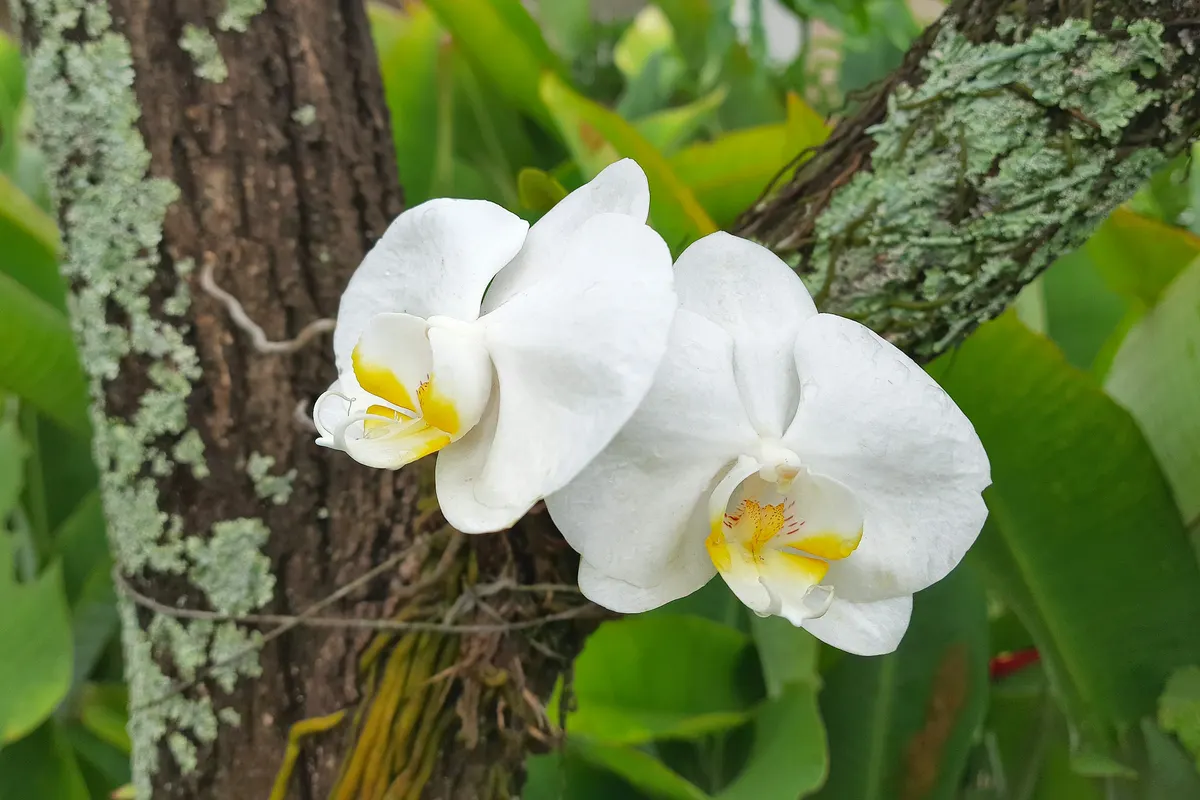
Roots poking out of the pot or growing above the bark worry a lot of people. They're normal. The RHS says not to cut them off or bury them. In the wild, the plant uses them to hold on to a tree and take in moisture.
The NYBG adds one exception: if lots of them suddenly appear and the bark has broken down, the plant may be stressed and need repotting.
Humidity
This is where sources differ. The NYBG recommends at least 50% relative humidity, ideally 65% or more, and notes that an average home can drop to around 25%.
The RHS suggests misting the leaves and aerial roots daily in hot weather, or standing the pot on a wide saucer of damp gravel. University of Nebraska Extension, on the other hand, says misting only makes a real difference if you do it every few minutes.
So a gravel tray with water, or grouping several plants together, is the more reliable option.
How to get it to flower again
A cooler spell is what triggers a new flower spike. The sources differ a little on the numbers:
- RHS: if a large, healthy plant hasn't flowered for a while, lower the temperature by about 5 °C for a month or so.
- NYBG: several weeks of nights at 13 to 16 °C (55 to 60 °F) help. After about two weeks of cooler nights a vigorous plant starts a new spike, and buds follow a few months later.
In practice, that means moving it to a cooler room in autumn, or closer to a window where it gets cooler at night.
Don't overdo the cold though. The RHS gives 16 °C as the minimum and the NYBG goes down to 13 °C for this trick, so don't go any lower than that.
What to do with the old flower spike
You have two options:
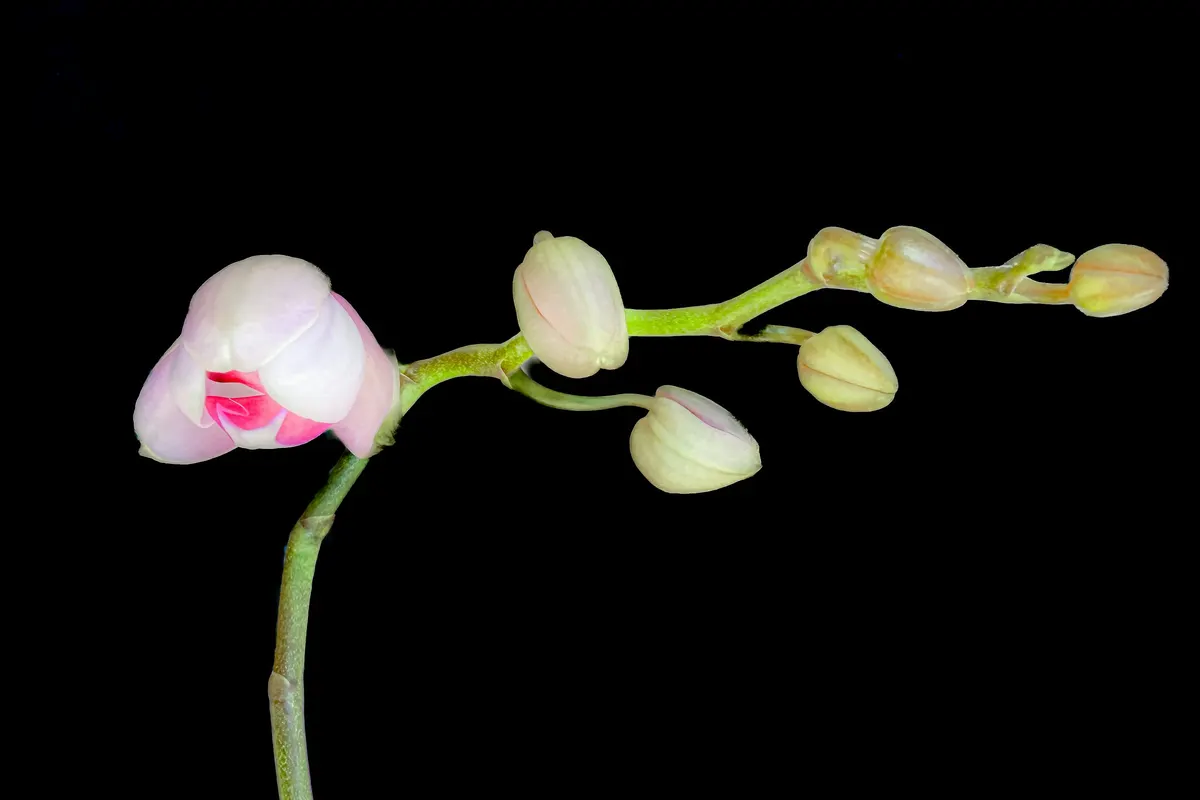
- Try for more flowers this season. Cut the spike just above the second node (the little joint) below the spent flowers. Both the RHS and the NYBG say a side shoot may grow from it. According to the NYBG it can flower in 8 to 12 weeks.
- Let the plant rest. Clemson University suggests cutting the spike down to the level of the leaves. A strong new spike can then appear within a year. The NYBG recommends cutting the whole spike off by mid-summer at the latest, so the plant can build up strength for next year.
If the spike turns yellow or brown and dries out on its own, cut it off at the base, the RHS says.
Repotting an orchid
Don't repot a Phalaenopsis while it's flowering. Clemson recommends repotting every one to three years, shortly after it finishes blooming. The RHS says about every two years, or when the plant outgrows its pot.
Remove dead roots and don't go for a pot that's too big, because a lot of mix stays wet for a long time. The general steps are in our post on how to repot houseplants, just use orchid bark instead of potting mix.
In short
- A bright spot without direct summer sun.
- Water by soaking, let it drain, never leave water in the outer pot.
- Orchid bark only, never soil.
- Leave the aerial roots alone.
- For a new spike, give it a few weeks of cooler nights in autumn.
Sources
- RHS: How to grow phalaenopsis
- New York Botanical Garden: Phalaenopsis
- Clemson Cooperative Extension: General Care for Phalaenopsis Orchids
- University of Nebraska-Lincoln Extension: Success with Houseplants: Humidity