
Christmas cactus not blooming or dropping buds? What to do
A Christmas cactus blooms after long nights in a cool spot. What to do about it in late October, and why the buds fall off.
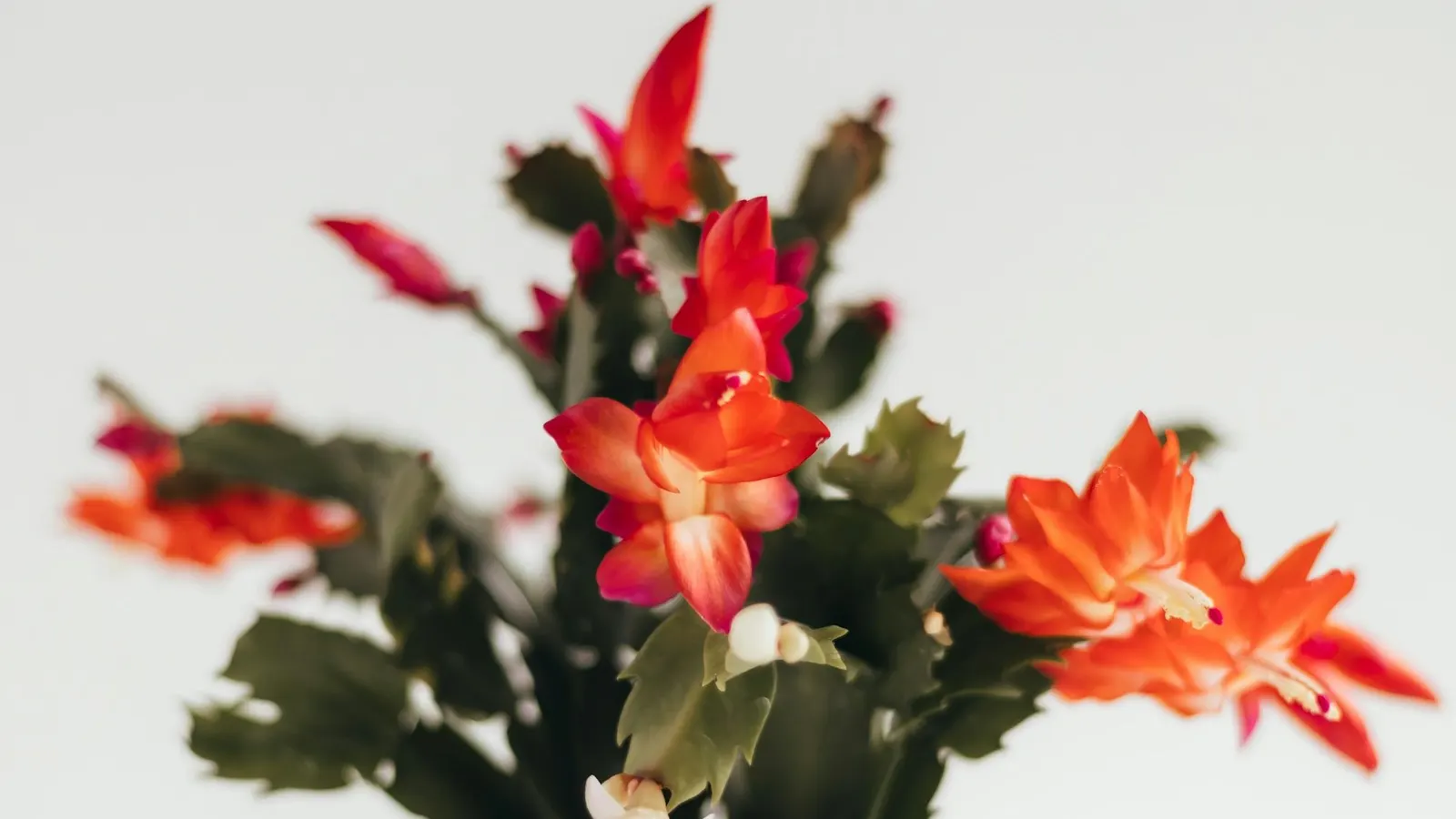
The Christmas cactus (Schlumbergera) flowers in late autumn and winter, when there's the least light outside.
If yours stays green, or drops its buds right before they open, the cause usually lies in what happened in autumn: lights on near it in the evening, too much warmth, or being moved around.
In late October you can still do something about it, just don't expect it to always make it for Christmas.
Which one do you have?
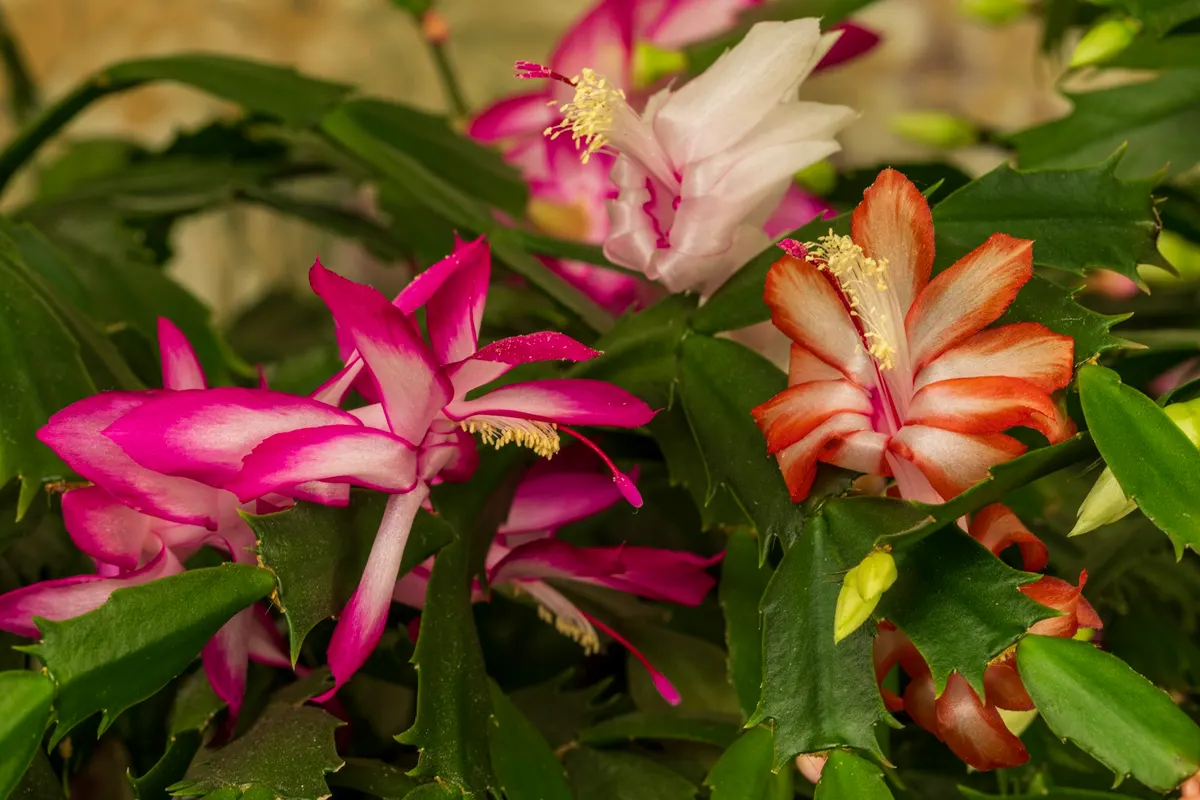
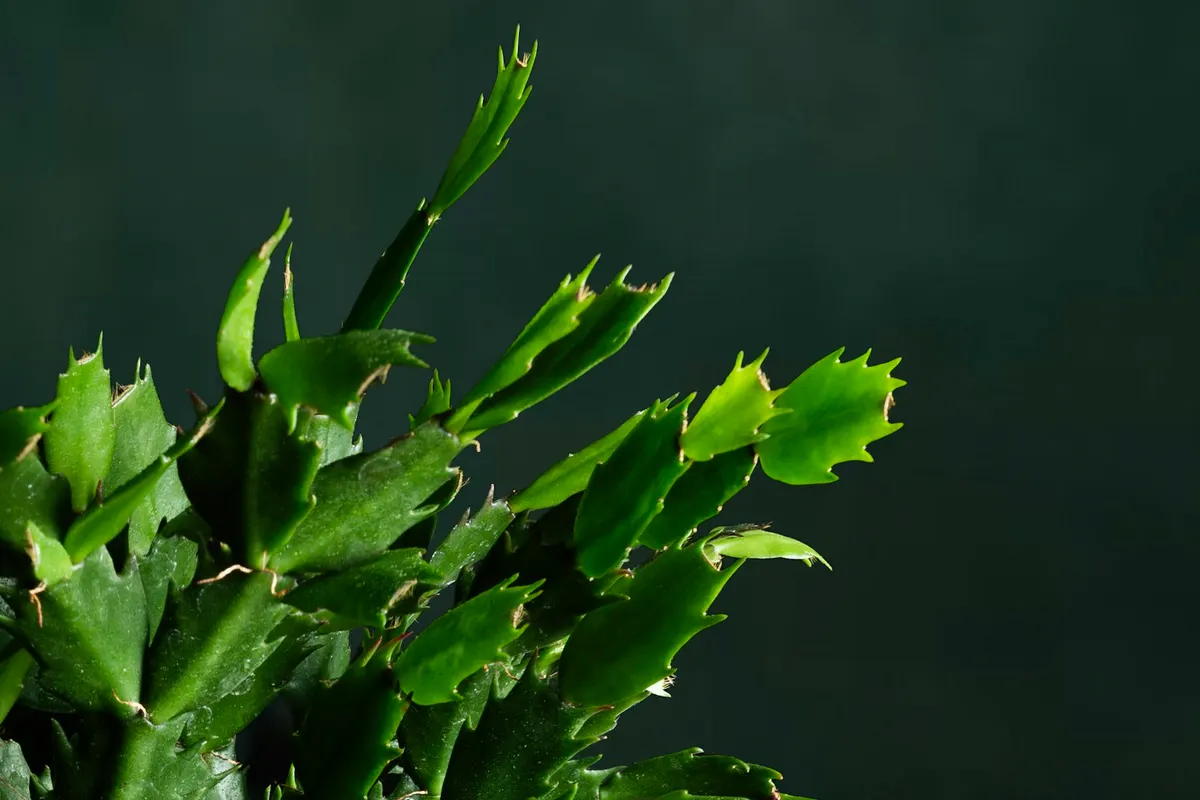
Shops sell two similar plants under the name Christmas cactus. According to Clemson University, you can tell them apart by the stem segments and the colour of the anthers in the flower:
| Schlumbergera truncata | Schlumbergera × buckleyi | |
|---|---|---|
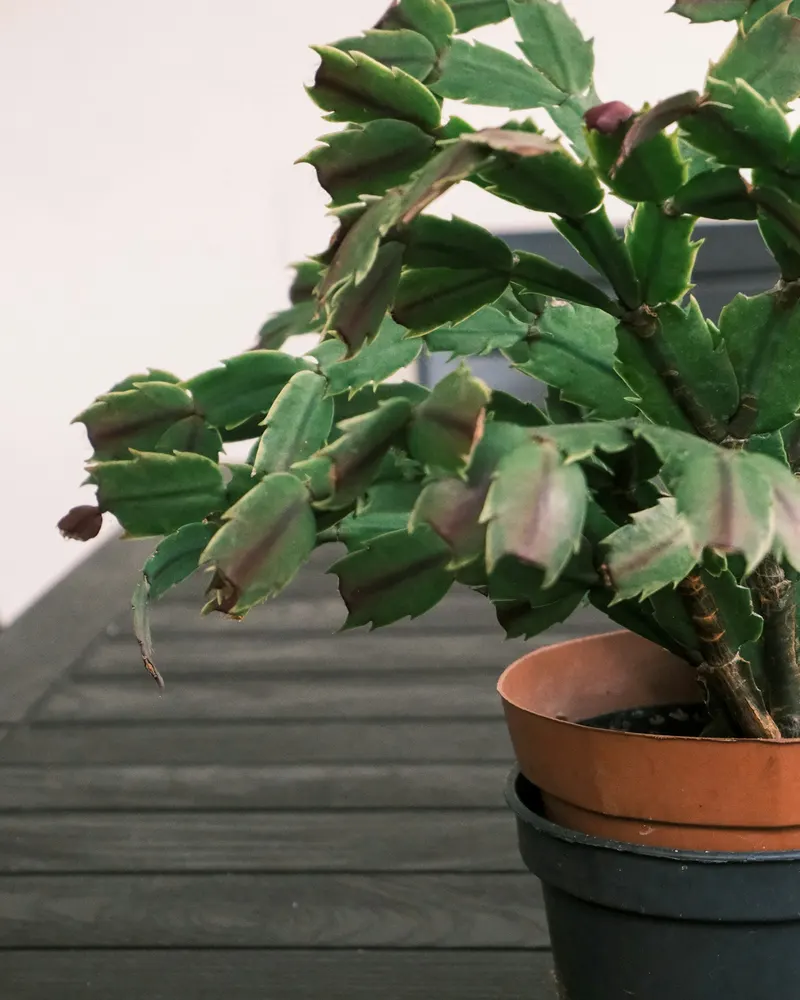
| Segment edges | 2 to 4 pointed teeth | rounded |
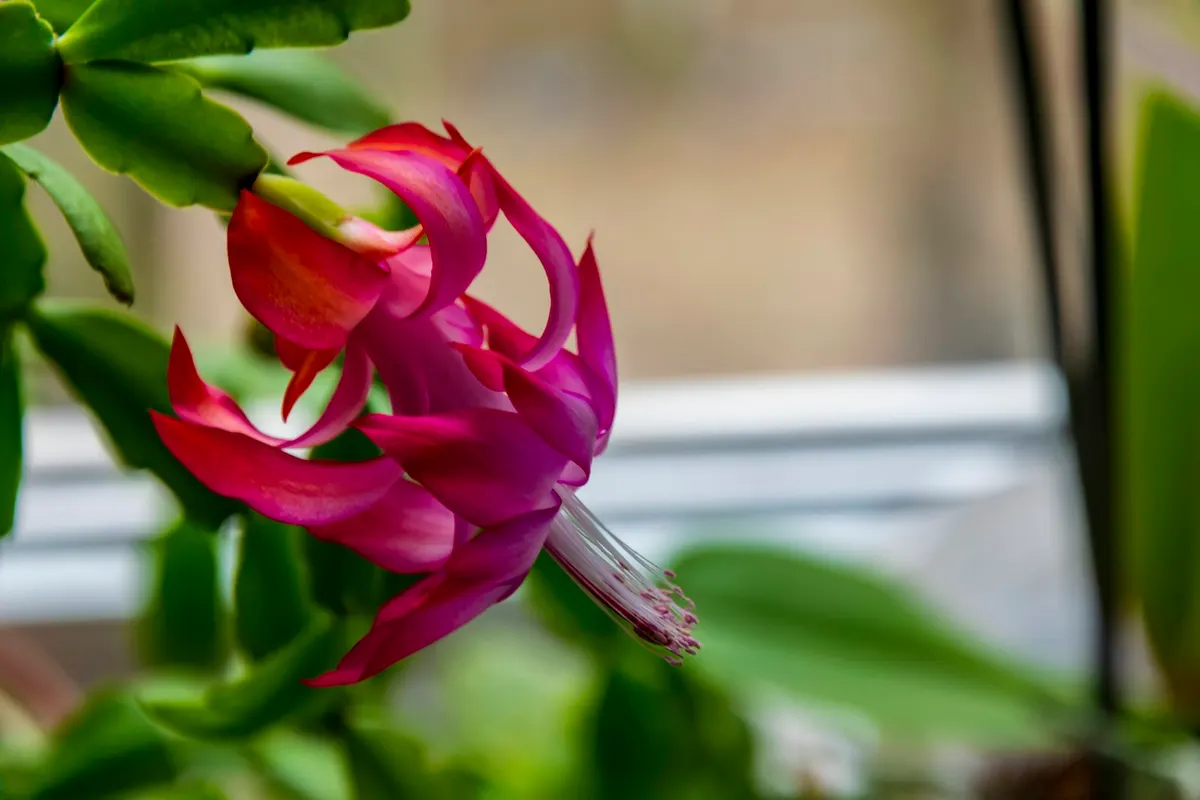
| Anthers | yellow | purplish brown |
| Blooms | about a month earlier | around Christmas |
The first one is called the Thanksgiving cactus, because it flowers around Thanksgiving in late November. Clemson says it's the one sold most often.
If your plant has toothed segments, it's probably this one, and it usually blooms before Christmas rather than at it. Both need the same care.
Why it won't bloom: long nights and cool air
A Christmas cactus starts making buds when the nights are long or the air is cool. In a flat where the lights are on all evening and the heating is running, it often gets neither.
Darkness. Clemson University says the plant needs 14 or more hours of uninterrupted darkness a day, from about mid-September, for at least 6 weeks. As little as 2 hours of light at night, such as a living room lamp or a street light, can stop buds from forming. NC State Extension gives a slightly lower figure, 13 to 14 hours of darkness for about 6 weeks. So the sources differ by an hour. If you want to be safe, go with 14.
Cool temperatures. The sources differ in the details here. Clemson University describes two routes. With long nights, ordinary room temperatures of 16 to 20 °C are fine. With night temperatures of 10 to 15 °C, it sets buds regardless of day length, though buds may drop at 10 °C. The RHS recommends a cooler spot at 12 to 15 °C from mid-September until buds appear, and warns that if the temperature doesn't fall below 18 °C, it may flower late or not at all. The RHS and NC State both say it shouldn't go below 10 °C. Give it dark nights and a spot around 12 to 15 °C and you've covered both routes.
How to get it to bloom this year
It's late October. First, check the ends of the stems. The RHS points out that flowers only form at the tips, so that's where to look for buds.
If it already has buds
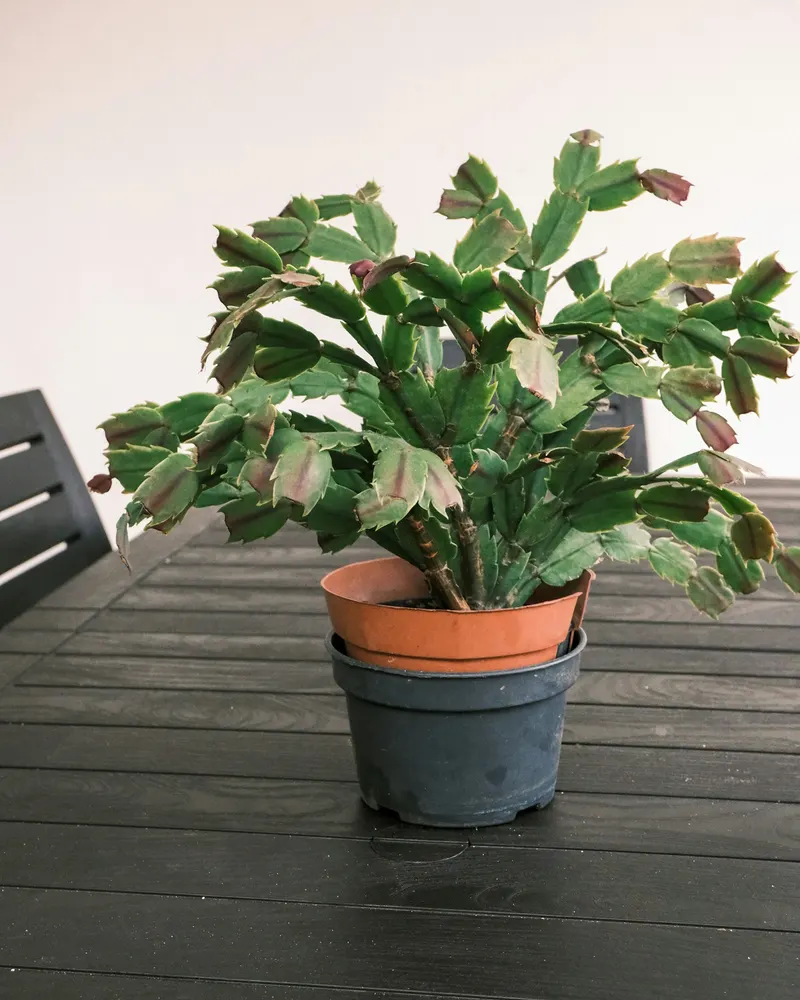
Leave it where it is and don't change anything big. NC State suggests keeping it at 16 to 20 °C once buds have set. Above all, stop carrying it from room to room or turning it around.
If it has no buds yet
Start now:
- Put it in a room where no lights go on in the evening, like an unheated bedroom or a cooler windowsill. Covering it with a cardboard box every evening and uncovering it in the morning also works.
- The ideal spot is around 12 to 15 °C, but not below 10 °C.
- Water a bit less, but don't let the soil dry out completely. That's what the RHS advises for the cool rest period.
Clemson says buds are usually visible in 3 to 4 weeks. Start in late October and you can expect them sometime in late November, and they take a while longer to open after that.
It can make it for Christmas, but nobody can promise you that. It may well flower after the holidays.
Why it drops buds (and leaves)
Buds drop for several reasons, and the sources agree on them fairly well:
- Changes in temperature and light. Clemson names sudden changes in temperature and light, the RHS fluctuating temperatures, too hot by day and too cold by night. The Missouri Botanical Garden also mentions warm or cold drafts and advises against moving a plant in bud. That includes the trip home from the shop in winter.
- Water. The Missouri Botanical Garden says both soil that dries out too much and overwatering cause bud drop. Clemson mentions drying out, the RHS overwatering.
- Heat. According to Clemson, constant warmth can make buds drop too, and once buds have set the temperature shouldn't go above 32 °C. That's more of a summer thing indoors, but a spot right next to the radiator won't do it any good either.
- Too many buds. Clemson notes that a plant sometimes sheds some buds on its own when it has set more than it can support.
If the plant wilts or loses whole stem segments while the soil stays wet for a long time, check the roots. Clemson says root rot is its main disease, and the way to prevent it is not to overwater.
Watering and feeding while it flowers
Once it has buds, keep the soil evenly moist, not wet. Clemson warns it should never sit in water. Empty the saucer or decorative pot after watering. For ways to tell when it's time to water, see How to tell when to water houseplants.
Don't feed it while it's flowering. On feeding, the sources differ a little: Clemson suggests feeding once a month at half strength from late winter or early spring through summer and stopping in late summer. The Missouri Botanical Garden suggests an even weaker solution, quarter strength. The RHS gives April to the end of September.
In practice it comes out about the same: feed in spring and summer, not in autumn and winter.
After flowering: rest, repotting, cuttings
Rest. The RHS recommends a rest after flowering, roughly from late January to late March, with less water but never bone dry.
Repotting. Here the sources disagree. The RHS says to repot at the end of March every year or two, once the roots have filled the pot, into a cactus compost. Clemson says about once every 3 years in spring is enough and that it flowers best when slightly pot-bound. If the roots haven't filled the pot yet, you don't need to repot. For how to do it, see How to repot houseplants.
Cuttings. According to Clemson, May or June is the best time. Twist off a piece with 3 to 5 segments, let it dry in the shade for a day or two, and push it about 2.5 cm deep into the potting mix. Clemson gives 3 to 8 weeks for rooting, the RHS 3 to 12 weeks, so be patient. Clemson also suggests pinching back the stem tips in early June, so the plant branches more and has more tips to flower from.
Is a Christmas cactus toxic to cats and dogs?
No. The ASPCA lists it as non-toxic to dogs, cats and horses. If your pets chew on anything green, a Christmas cactus is one of the safer choices. You'll find more safe plants in Houseplants safe for cats and dogs.
Sources
- Clemson University HGIC: Thanksgiving & Christmas Cacti
- NC State Extension: Thanksgiving or Christmas Cacti? What Is the Difference & How to Force Rebloom
- RHS: Christmas cactus growing guide
- Missouri Botanical Garden: How do I care for my Christmas cactus?
- ASPCA: Christmas Cactus