
Cyclamen care: why the leaves turn yellow and how to water
Cyclamen likes it cool, not warm next to a radiator. Where to put it, how to water it and when yellow leaves are perfectly normal.
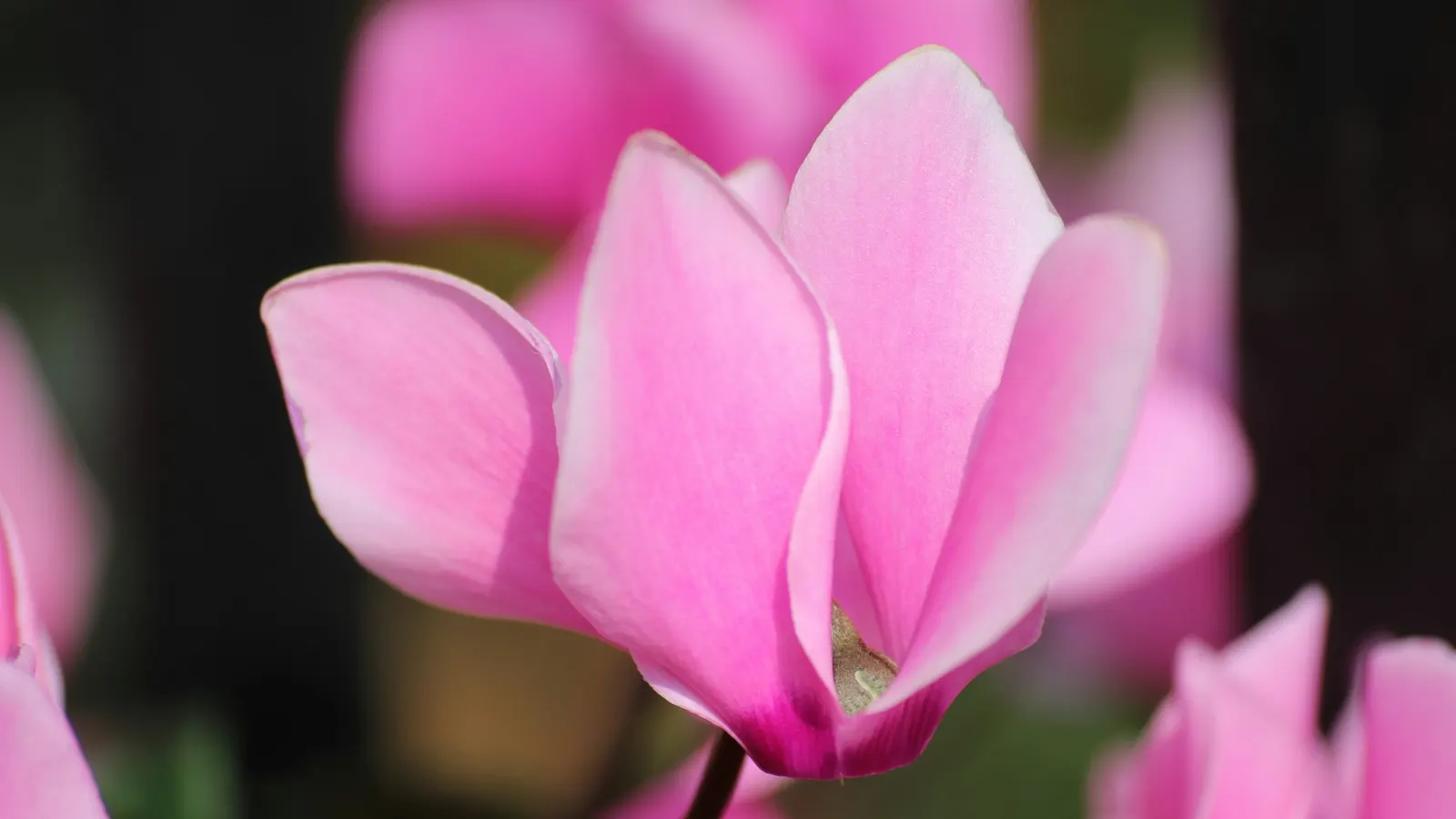
Florist's cyclamen (Cyclamen persicum) shows up in every flower shop and supermarket in November. It flowers in winter and has lovely marbled leaves. At home, though, it often lasts only a few weeks before the leaves start yellowing and the flowers flop.
The most common reason is simple: your flat is too warm for it. Cyclamen is a plant for a cool room, and once you know that, it will keep flowering for much longer.
Where to put it: cool and bright
Heat bothers cyclamen more than anything else. Sources give slightly different numbers, but they all describe a cool room:
| Source | Recommended temperature |
|---|---|
| University of Wisconsin | 16 to 18 °C by day, around 10 °C at night |
| Iowa State University | 10 to 16 °C while flowering |
| New York Botanical Garden | 13 to 18 °C |
A typical living room at 22 °C is too warm. The University of Wisconsin says cool conditions make each flower last longer and stretch out the whole flowering season. NYBG adds that heat sources shorten the plant's life.
In practice, a cooler bedroom, a stairwell, a bright hallway or a windowsill without a radiator underneath works well. It needs lots of light, but indirect. According to NYBG it can take a few hours of direct morning sun, and the University of Wisconsin suggests an east-facing window.
How to water cyclamen
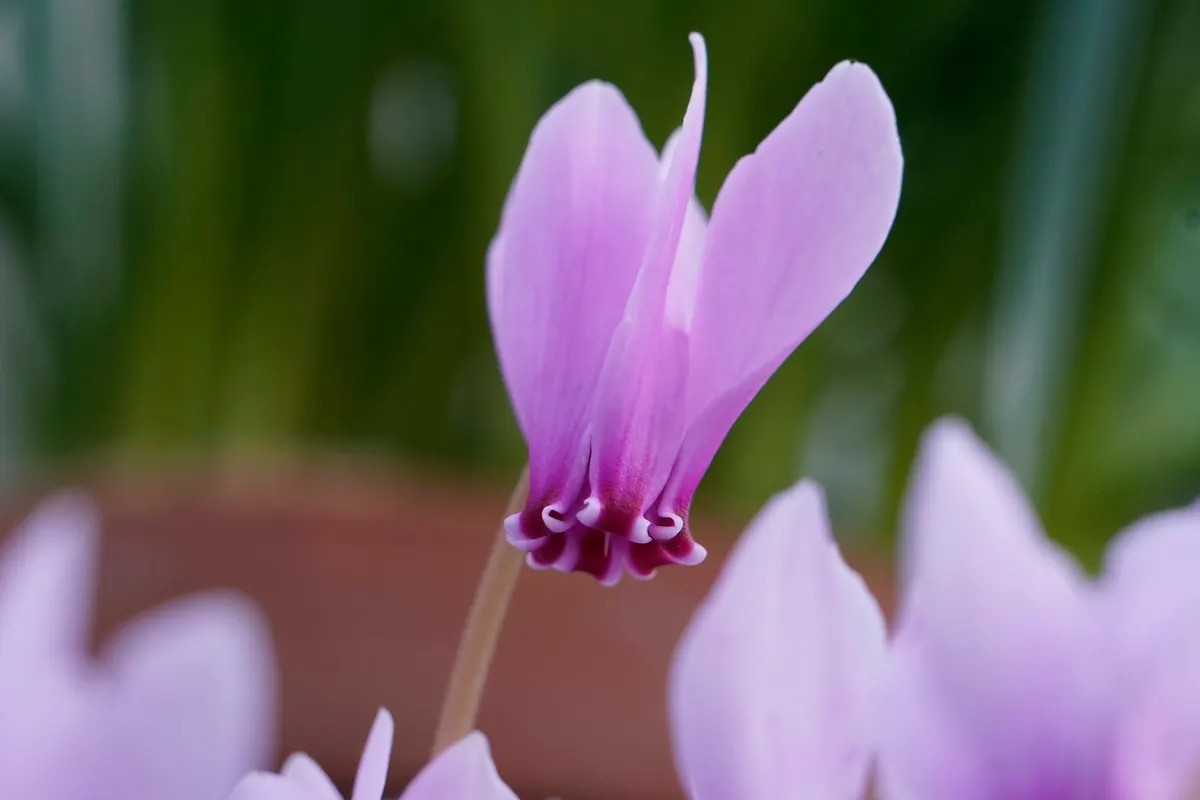
Cyclamen grows from a tuber that sits partly above the soil. Pour water onto it and it rots easily. That's why watering from below is worth the effort.
1. Check the soil
Water only when the surface of the soil feels dry. Iowa State suggests checking it every day and, if it's still moist, waiting until the next day. If you're not sure how to tell, see How to tell when your houseplant needs water.
2. Stand the pot in water
Put the pot in a bowl of room-temperature water. NYBG says about 10 minutes, the University of Wisconsin says 15. The soil soaks up water through the drainage holes and the tuber stays dry.
3. Let it drain
Then lift the pot out and let the extra water run off. Only put it back in its cover pot once it has stopped dripping.
Why cyclamen leaves turn yellow
There are several possible reasons:
- Too warm and dry. The University of Wisconsin lists hot, dry conditions as a cause of both yellow leaves and dropped buds. In a heated flat in winter this is the usual culprit.
- Too much or too little water. The same source says leaves yellow when the soil is kept constantly wet, and also when it dries out completely.
- Not enough light. The University of Wisconsin names this as a cause too.
- Natural rest. If the leaves yellow in spring after flowering, that's normal. Iowa State explains that this is the plant getting ready for its summer rest.
If leaves are yellowing now, in winter, while the plant is still in flower, it's almost always one of the first three. Move it somewhere cooler and look at how you water. NYBG says to remove yellow leaves. Take spent flowers off with their whole stalk: both NYBG and the University of Wisconsin say to twist the stalk and pull sharply so it comes away cleanly at the base. For yellow leaves on houseplants in general, see Why houseplant leaves turn yellow and what to do.
Humidity and feeding
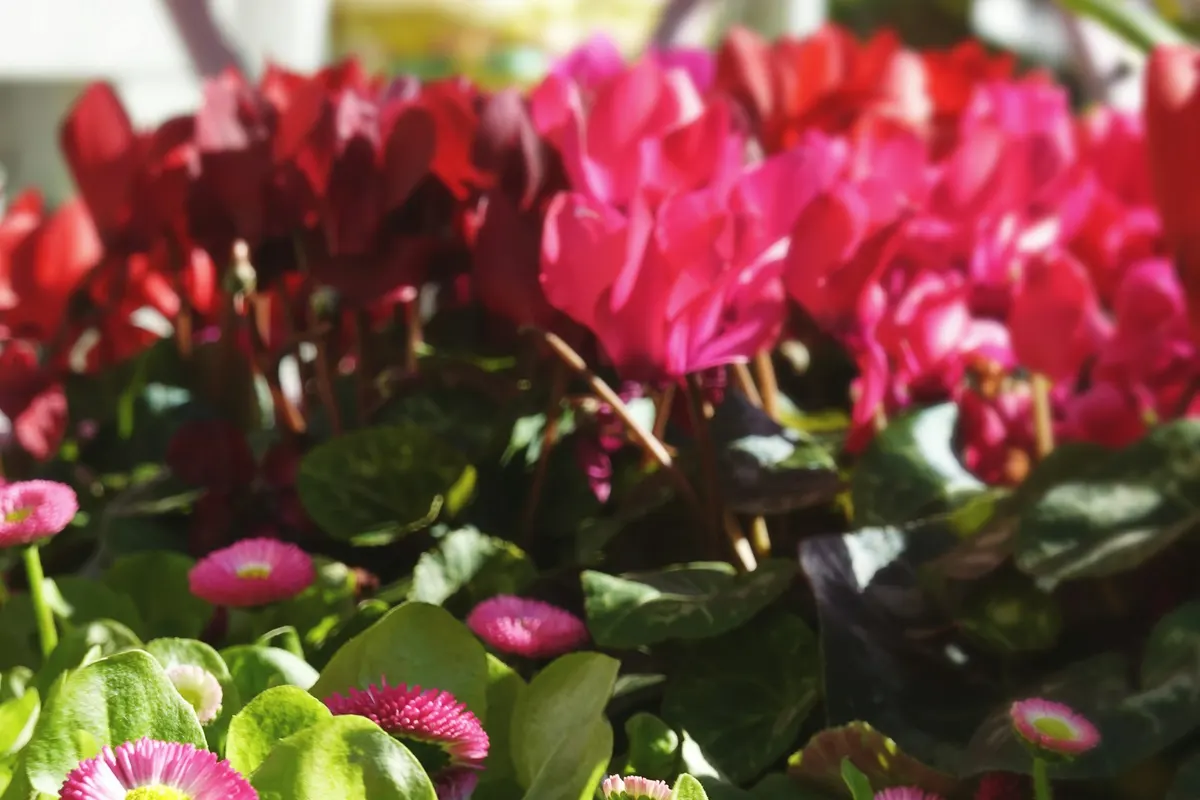
While it's flowering, cyclamen wants higher humidity. Both the University of Wisconsin and NYBG suggest standing the pot on a tray of wet pebbles, so the bottom of the pot isn't sitting in water. A warm draught from a radiator does it no good.
The sources differ a little on feeding. Iowa State recommends a diluted fertiliser every 2 weeks while it's in bloom. The University of Wisconsin also says every 2 weeks while it's actively growing, using a low-nitrogen fertiliser or a houseplant feed for flowering plants. It also warns that too much fertiliser causes lush growth that is more prone to disease. So go easy.
Pests
Cyclamen doesn't get many pests, but the University of Wisconsin mentions aphids, mealybugs, spider mites and thrips. Insecticidal soap or a product labelled for houseplants will deal with those.
The worse one is a tiny mite called the cyclamen mite. The University of Wisconsin says it is very hard to control and an infested plant is best thrown away, so it doesn't spread to your other plants.
What to do after it flowers
According to the University of Wisconsin it can flower for up to 3 months, and NYBG says the plants last 2 to 3 months. After that most people throw it out, because getting it to flower again isn't easy. You can try, though:
- When the leaves start to yellow in spring, gradually cut back on watering and feeding.
- Let the tuber rest somewhere cool and shaded. Iowa State says 7 to 10 °C, the University of Wisconsin around 10 °C in dry vermiculite.
- The sources disagree on how long the rest should be: Iowa State says 6 to 8 weeks, the University of Wisconsin 2 to 3 months (6 to 12 weeks if the tuber is stored in vermiculite).
- Then repot the tuber in fresh, well-draining mix with its top half above the soil. Start watering again when new leaves appear.
In autumn, once buds appear, move it back to a bright, cool spot.
Is cyclamen toxic to cats and dogs?
Yes. The ASPCA lists it as toxic to dogs, cats and horses. It contains terpenoid saponins, which cause drooling, vomiting and diarrhoea. After large amounts of the tubers are eaten, the ASPCA also lists heart rhythm problems, seizures and death.
For safer options, see Houseplants safe for cats and dogs.
Sources
- University of Wisconsin-Madison Extension: Cyclamen
- Iowa State University Extension: All About Cyclamen
- New York Botanical Garden: How do I care for my cyclamen plant?
- ASPCA: Cyclamen