
Why houseplant leaves turn yellow and what to do
Which leaves turn yellow, and how they look, tells you more than the yellow itself. Here's how to read the signs.
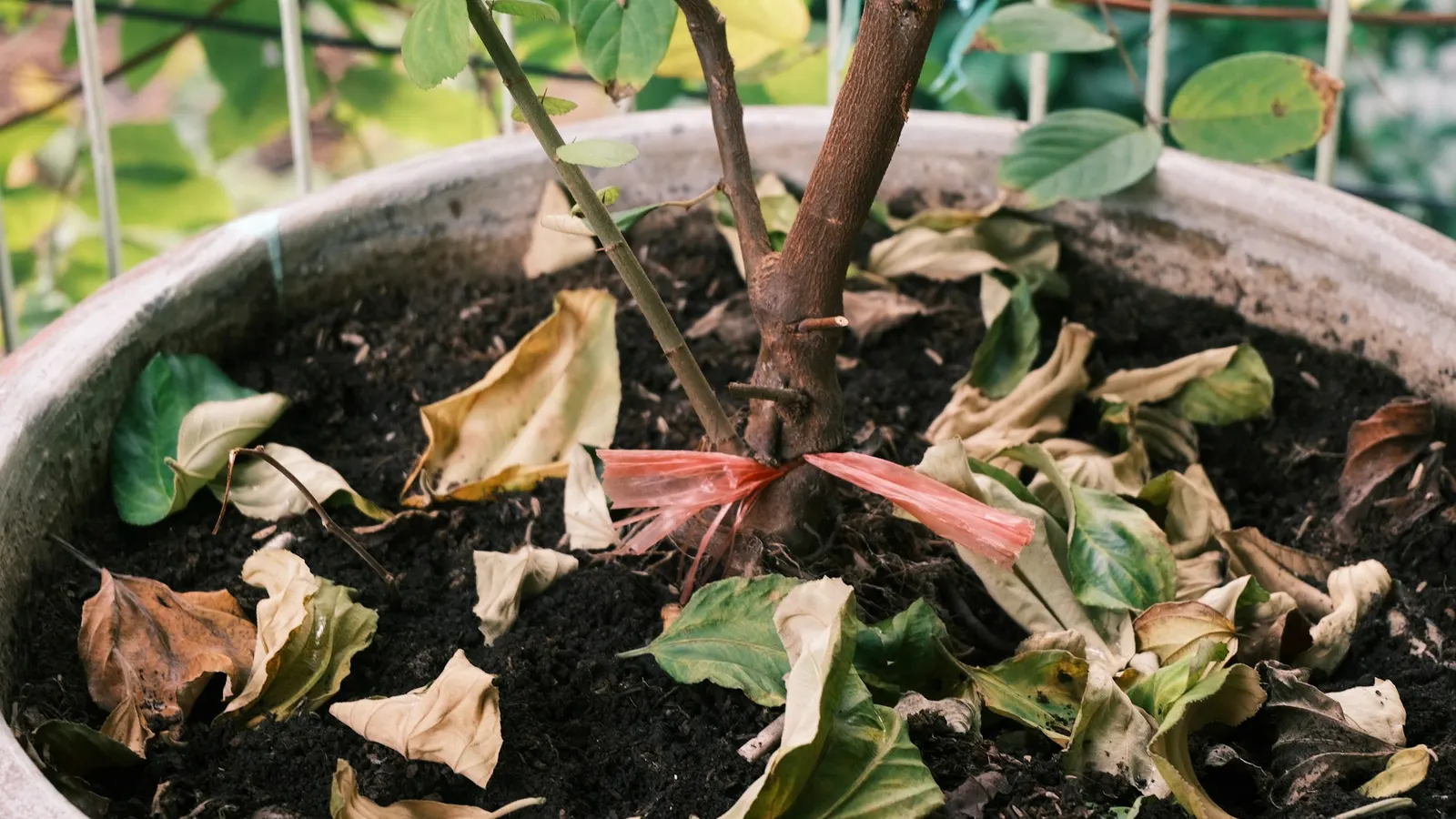
A yellow leaf on a houseplant can be alarming, but on its own it doesn't tell you much. A leaf can turn yellow on a plant you water too often and on one you keep forgetting. Sometimes it's completely normal.
The trick is to look at which leaves are yellowing, how many there are and what exactly they look like. That usually narrows the cause down pretty reliably.
First: one lower leaf is not a problem
The Royal Horticultural Society (RHS) says it's normal for the odd lower leaf on a mature plant to turn yellow and fall. The plant replaces old leaves with new ones over time.
If the rest of the plant is firm, green and growing, there's nothing to fix. Just remove the yellow leaf.
Pay closer attention when lots of leaves yellow at once, when the young leaves at the top yellow too, or when the yellowing comes with wilting or spots.
Overwatering: the most common cause
Clemson University says yellowing is most often a symptom of overwatering. When the soil stays wet, the roots get too little oxygen and root diseases develop more easily.
Iowa State University lists the typical signs of overwatering as yellowing or browning leaves, leaf drop, wilting even though the soil is wet, and rot at the base of the stem. Fungus gnats, the small black flies hovering over the soil, are another giveaway.
What to do:
- Push a finger into the soil. If it's still wet a few centimetres down, don't water.
- Check that the pot has a drainage hole and that the plant isn't sitting in water in a saucer or decorative outer pot.
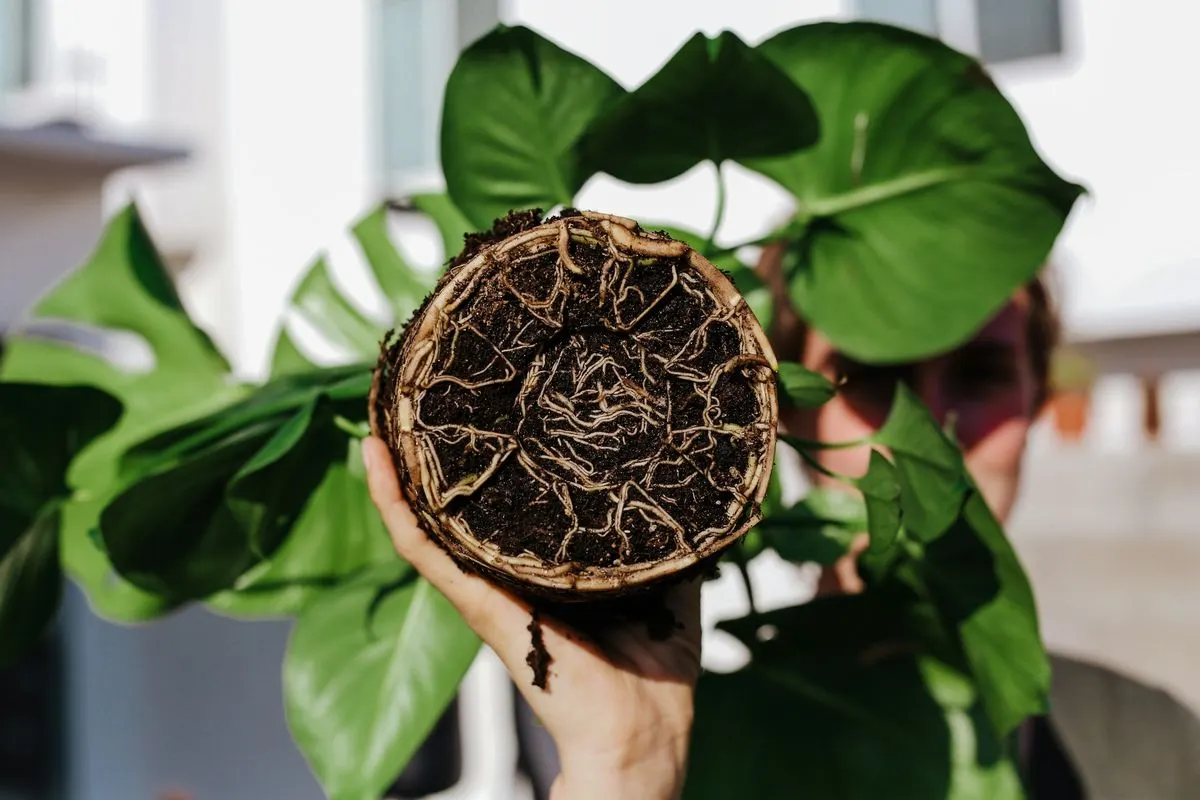
- If things don't improve, slide the plant out of its pot and look at the roots. Clemson's advice is that if most of the roots are dark, soft and dead, it's better to discard the plant.
We cover how to spot the right moment to water in How to tell when your houseplant needs water.
Too little water
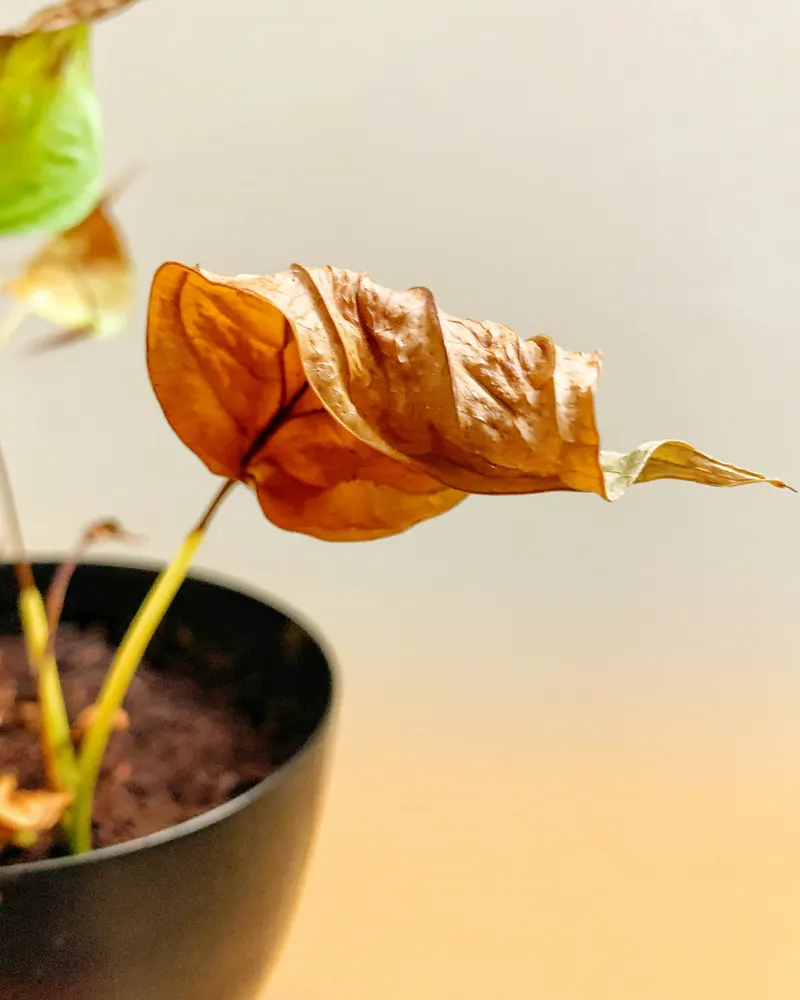
Drought can yellow leaves too. Clemson notes that when a plant is left too dry for an extended time, the lower leaves can turn yellow and die off. Chronic underwatering leads to wilting and curling leaves.
For peace lilies, Clemson describes how the plant wilts and the leaves and their edges turn yellow if the soil dries out too much.
You can tell this apart from overwatering by the soil: with drought it's dry well below the surface, with overwatering it's wet.
Too little or too much light
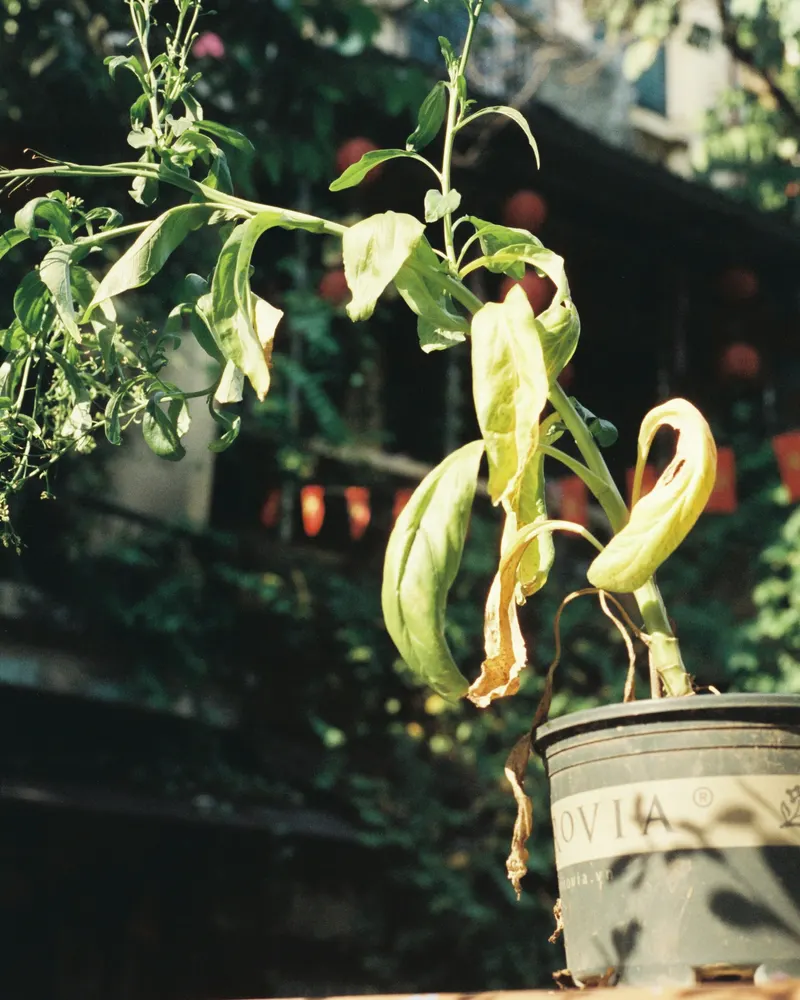
Clemson lists too little light among the common causes of a whole plant yellowing. The RHS mentions a position that's too shady, and also the opposite problem: strong midday sun can scorch leaves yellow.
- Too little light: according to Mississippi State University, leaves turn yellowish green, the oldest ones drop, growth is weak and thin and new leaves are small. Move the plant closer to a window.
- Too much sun: yellow or bleached patches show up on the leaves that get direct sun. A sheer curtain or a few steps back from the glass helps.
If you're looking for plants that cope with less light, see Houseplants for low light.
Hunger: missing nutrients
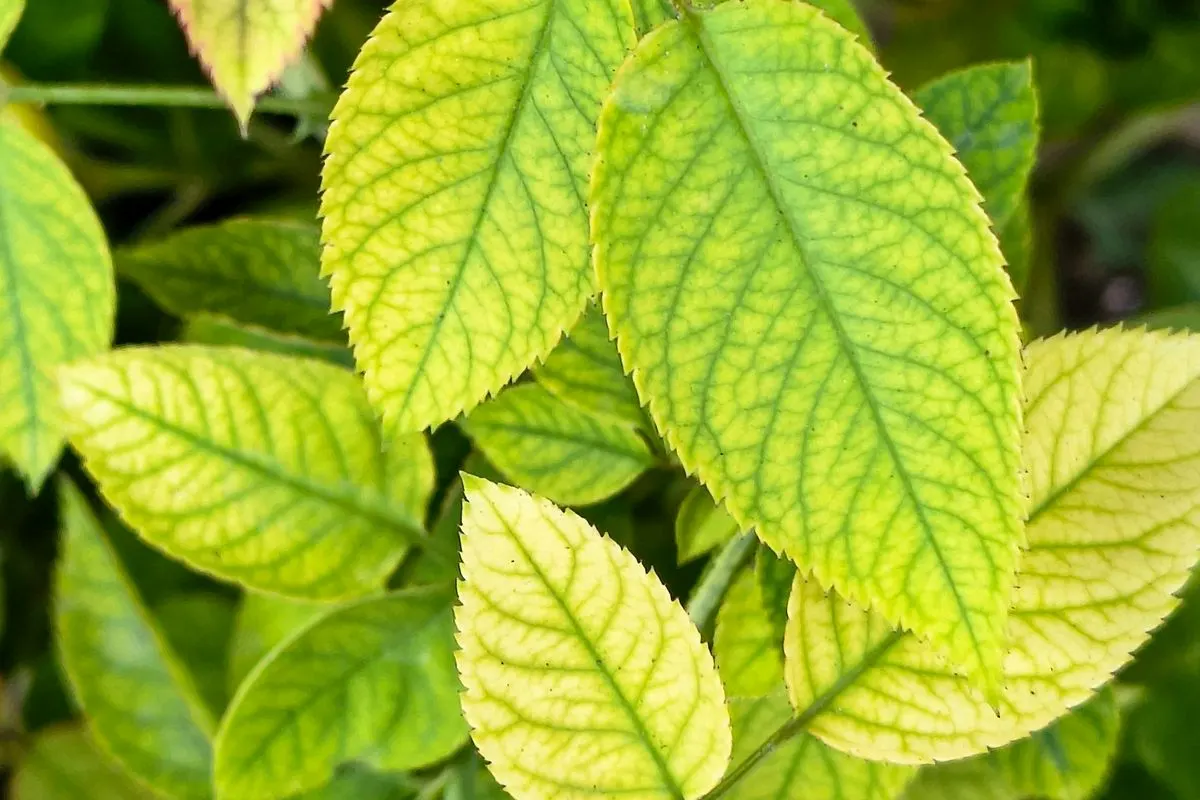
When it's mostly the lower, older leaves that yellow and the plant has been in the same potting mix for a long time, it may be short on nutrients. Clemson puts this down mainly to a lack of nitrogen or iron, and adds that pot-bound plants are especially prone to it.
Regular feeding and repotting into fresh mix every so often prevents it. For pothos, Clemson suggests a houseplant fertiliser every other month in spring and summer.
Yellowing between the veins while the veins stay green is a different pattern. In peace lilies, Clemson links it to magnesium deficiency.
The RHS notes that if upper leaves turn yellow but stay firm on lime-hating plants, excess calcium may be the cause. Long-term watering with hard tap water instead of rainwater can do the same.
Pests
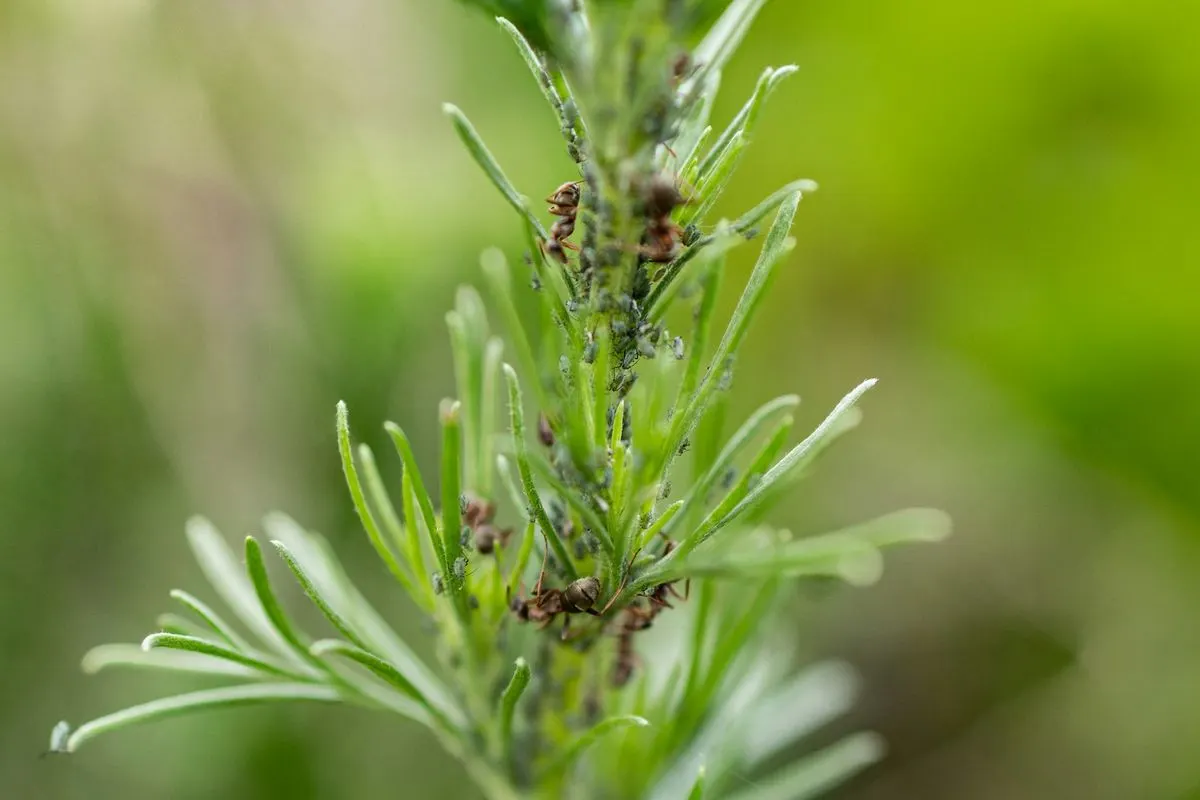
If leaves are yellowing without a clear pattern, turn them over and check the undersides. According to Clemson:
- Spider mites leave fine pale speckles on leaves, the plant looks faded, and later the leaves turn yellow or bronze.
- Aphids suck sap, leaving leaves yellow and misshapen.
- Whiteflies make leaves turn yellow and die.
Cold, draughts and the stress of a move
The RHS also lists cold, a sudden drop in temperature and draughts as causes of yellowing, and many houseplants are sensitive to draughts especially in winter.
Clemson adds that after a big change of environment, such as coming home from the shop or moving to a new spot, a plant may drop some leaves. That leaf drop should only last about three weeks.
Quick guide
| What you see | Likely cause |
|---|---|
| The odd lower leaf, rest of the plant healthy | Natural ageing |
| Yellow leaves, soil always wet, plant wilting | Overwatering |
| Yellow, dry lower leaves, dry soil | Too little water |
| Pale leaves, slow growth, far from a window | Too little light |
| Yellow patches on leaves in direct sun | Sun scorch |
| Lower leaves yellowing, plant not fed or repotted for a long time | Nutrient shortage |
| Yellow between the veins, veins still green | Nutrient shortage (e.g. magnesium, iron) |
| Speckles, sticky leaves, insects underneath | Pests |
In short
- One old lower leaf is nothing to worry about. Pay attention when many leaves or young leaves yellow.
- Always start with the soil. Overwatering is the most common cause.
- Then check the light, the undersides of the leaves, and when you last fed or repotted.
- Once you've found the cause, feel free to remove the yellow leaves.
Sources
- RHS: Leaf damage on houseplants
- Clemson Cooperative Extension, HGIC: Houseplant Diseases & Disorders
- Clemson Cooperative Extension, HGIC: Common Houseplant Insects & Related Pests
- Clemson Cooperative Extension, HGIC: How to Grow Pothos Indoors
- Clemson Cooperative Extension, HGIC: Peace Lily
- Mississippi State University Extension: Care and Selection of Indoor Plants
- Iowa State University Extension: Diagnosing Houseplant Problems Related to Poor Culture