
Peace lily: brown tips, drooping and why it won't flower
A peace lily shows quickly when something is off. How to tell dry air from thirst or too much fertiliser, and what to do if it won't flower.
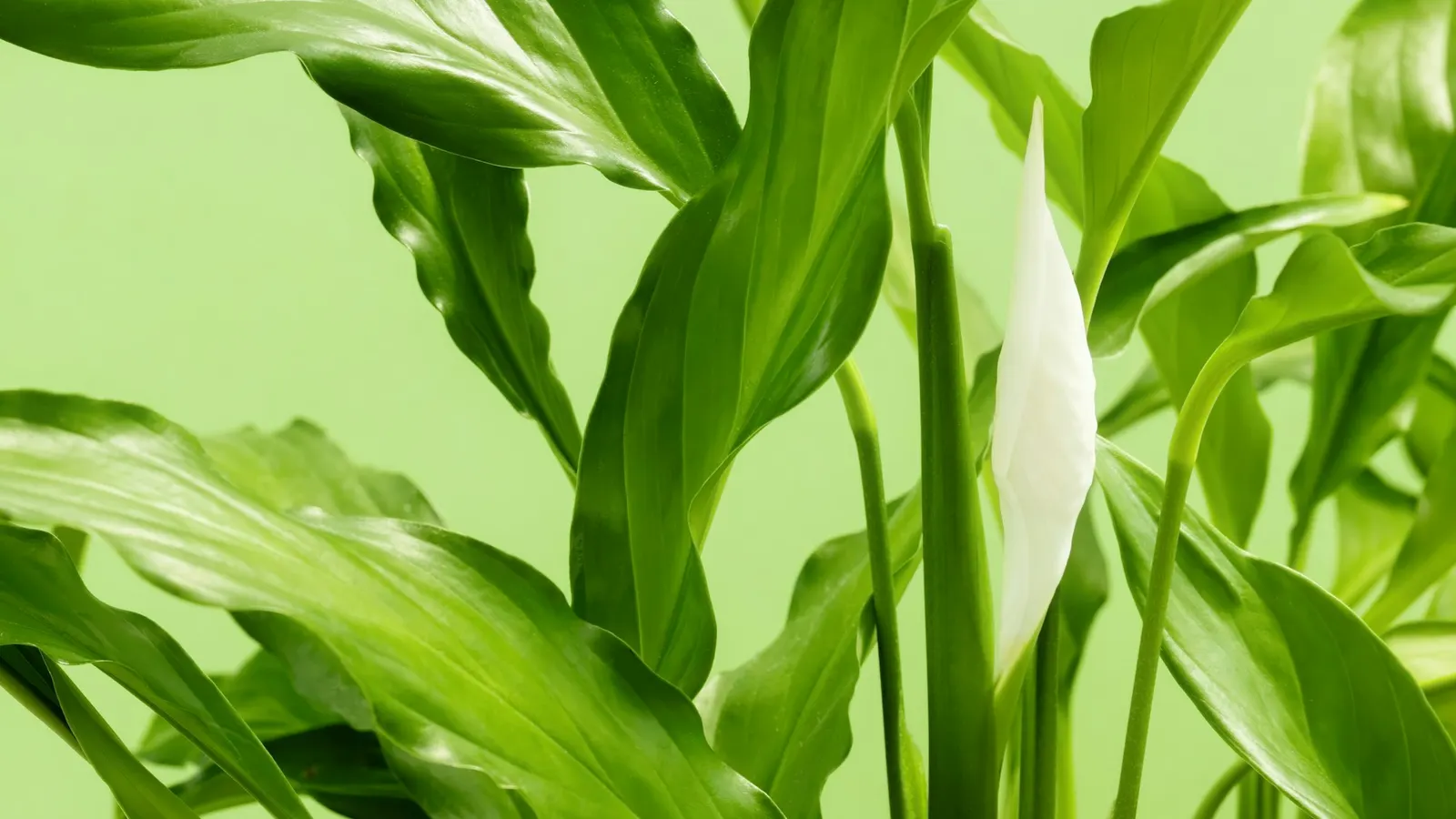
Almost everyone has a peace lily (Spathiphyllum) somewhere at home. It's easy going, copes with less light, and when it's thirsty its leaves flop over, so you know straight away it needs water.
In winter, though, it often complains in other ways: the leaf tips go brown, a few leaves turn yellow and the white flowers don't show up for months. Brown tips and missing flowers usually come down to the heating, the watering, the fertiliser or the light. Here's how to work out which.
Brown leaf tips: the most common winter problem
Sources list several causes for brown tips and each puts the weight somewhere slightly different:
- Dry air. The RHS says brown leaves on a peace lily are usually down to very dry air. NC State and South Dakota State University (SDSU) also name low humidity. In winter, with the heating on, it's the first thing to check.
- Drying out. Clemson University and SDSU both mention tips browning when the soil dries out too much.
- Too much fertiliser. Clemson warns that overfeeding burns both the leaf tips and the roots. NC State adds that salts building up in the soil do damage too.
- Direct sun. NC State and SDSU both list too much light as a cause.
- Fluoride in water. University of Missouri Extension describes brown leaf tips as a typical sign of fluoride sensitivity and uses Spathiphyllum as its example.
What to do:
1. Move it away from the radiator
Clemson and the RHS both say to keep it away from heat sources and cold draughts. A windowsill right above a radiator is a bad spot for it in winter.
2. Raise the humidity
According to University of Missouri Extension, 40 to 60 % relative humidity suits most plants best, though it's hard to reach indoors. The RHS suggests standing the pot on a tray of damp gravel or misting regularly. It calls a bathroom the ideal spot, as long as there's enough light.
3. Check the water and the fertiliser
The RHS recommends rainwater rather than tap water. SDSU suggests leaving tap water to stand overnight so it's at room temperature. If you've been feeding it over the last few months, stop for the winter.
Tips that have already gone brown won't turn green again, so after you change something, watch the new leaves. If the old tips bother you, trim them with clean scissors.
Why it droops and turns yellow
Drooping leaves with dry soil mean thirst. Clemson and SDSU both link wilting to a lack of water, and the RHS says the plant perks up after a thorough drink.
Watch out for the opposite case. If your peace lily droops while the soil is wet, the problem is in the roots. Clemson says root and stem diseases are its most common problem and are usually linked to overwatering. The RHS warns that roots rot when the compost stays wet for long periods. So always tip out the water from the saucer. For how to tell when it's time to water, see How to tell when to water a houseplant.
Yellow leaves can mean overwatering or underwatering, according to SDSU. Clemson describes leaves and their edges yellowing when the plant dries out badly. If it's mainly the older leaves going yellow, SDSU links that to a plant that hasn't been repotted in a while. A different pattern is yellowing between the veins while the veins stay green, which Clemson puts down to magnesium deficiency.
Why your peace lily won't flower
Clemson gives two main reasons: the plant is less than a year old, or it isn't getting enough light.
Sources differ a bit on light. NC State says partial to deep shade is fine. Clemson agrees it tolerates shade but says it grows best in bright indirect light. In practice it will survive in a dark corner, but it's more likely to flower somewhere brighter, out of direct sun.
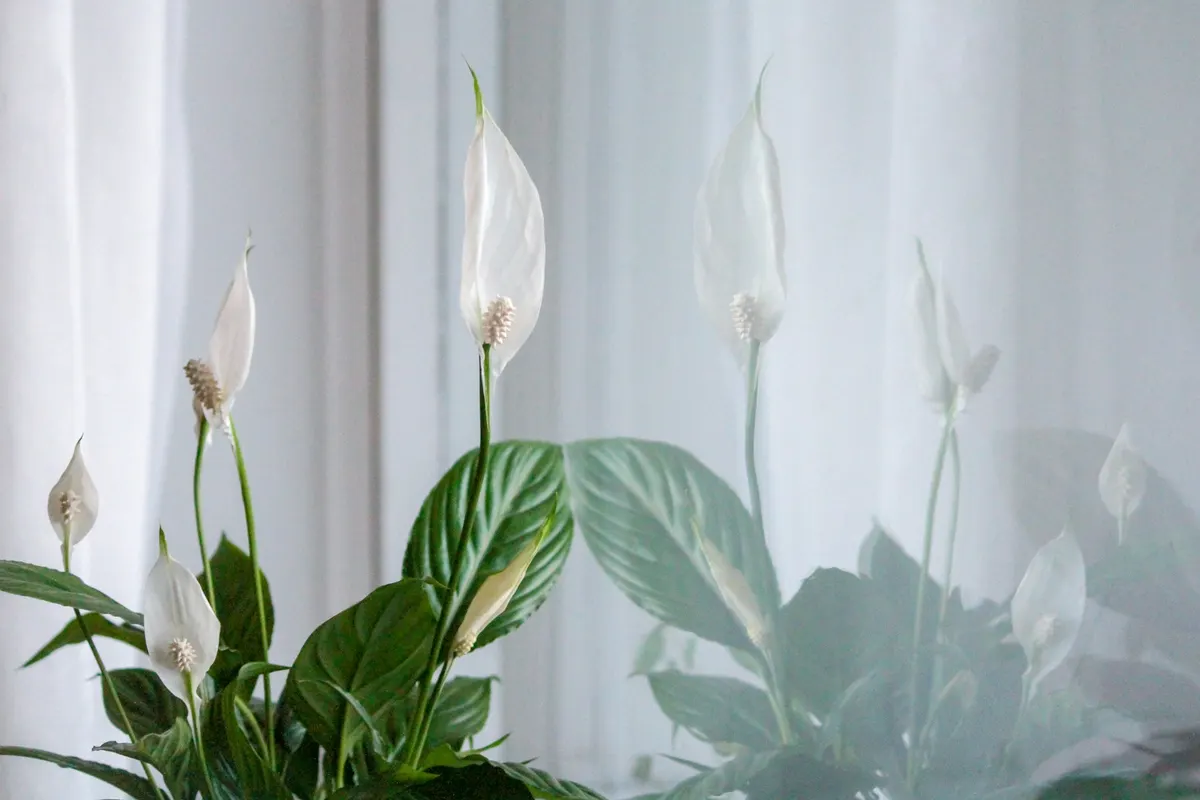
There's one more thing nobody tells you at the shop. According to the University of Florida, growers trigger flowering with a spray of a plant hormone (gibberellic acid), and the flowers appear 70 to 110 days later. Without it, peace lilies naturally flowered only in spring and early summer. So if your shop-bought plant has finished flowering and no new flowers follow, that's normal. NC State notes that peace lilies have no specific bloom time, so a new flower can turn up later. Expect it more in spring, when there's more light.
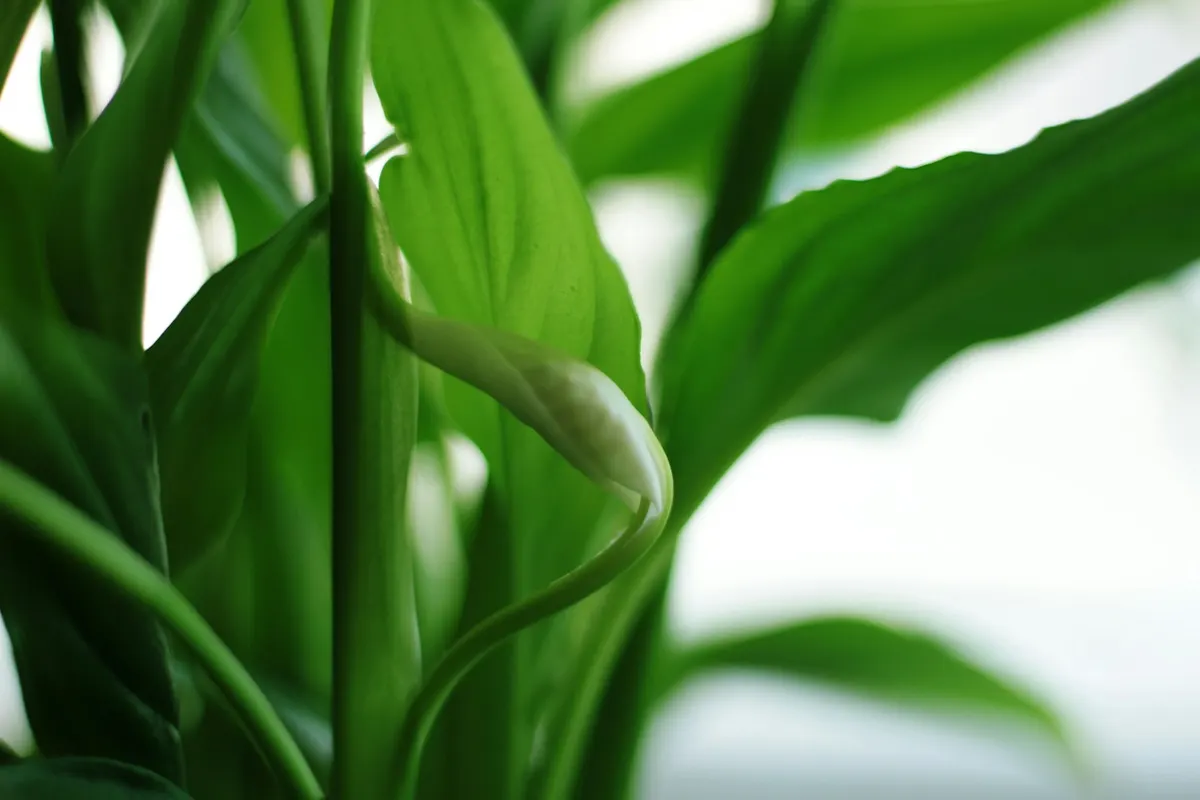
Why the flower turns green. That's not a fault. NC State says the white flower fades to pale green after about 10 days and stays attractive for at least another month. The RHS says it lasts several months and gradually turns greener. Once it looks tired, you can cut it off.
Winter care
- Temperature. Clemson recommends 20 to 29 °C by day, about 5 to 6 °C cooler at night and not below 15 °C. SDSU gives 18 to 27 °C and warns against 13 °C or lower. According to NC State, growth slows right down at 4 to 15 °C, and longer spells below 4 °C damage leaves and roots. So be careful when airing the room if it sits on the windowsill.
- Feeding. Clemson advises feeding only in spring and summer, every 6 to 8 weeks, at a quarter of the recommended strength. NC State suggests flushing the soil with water between feeds so salts don't build up.
- Repotting. Repot only when roots grow out of the drainage holes or circle the surface, as Clemson says. A pot 2.5 to 5 cm wider is enough, ideally in spring when the plant is growing. For how to do it, see How to repot houseplants.
- Dust and pests. NC State recommends wiping the leaves regularly with a damp cloth, which removes dust and some of the pests hiding underneath. Clemson lists fungus gnats, mealybugs, spider mites and scale among peace lily pests.
Is a peace lily toxic to cats and dogs?
Yes. The ASPCA lists it as toxic to both cats and dogs. It contains insoluble calcium oxalate crystals that cause burning and irritation of the mouth, tongue and lips, drooling, vomiting and difficulty swallowing. Clemson notes it can harm children the same way. The RHS suggests wearing gloves when handling it, because the sap irritates skin.
Despite the name, it isn't a true lily. For plants that are safer around pets, see Houseplants safe for cats and dogs.
Sources
- Clemson University HGIC: Peace Lily
- NC State Extension Gardener Plant Toolbox: Spathiphyllum
- South Dakota State University Extension: Peace Lily: Houseplant How-To
- RHS: Peace lilies
- University of Missouri Extension: Caring for Houseplants
- University of Florida IFAS Extension: Spathiphyllum Flowering: Keys to the Future
- ASPCA: Peace Lily