
How to care for a poinsettia
Cold on the way home, drafts and soggy soil. The three most common reasons a poinsettia doesn't make it to New Year.
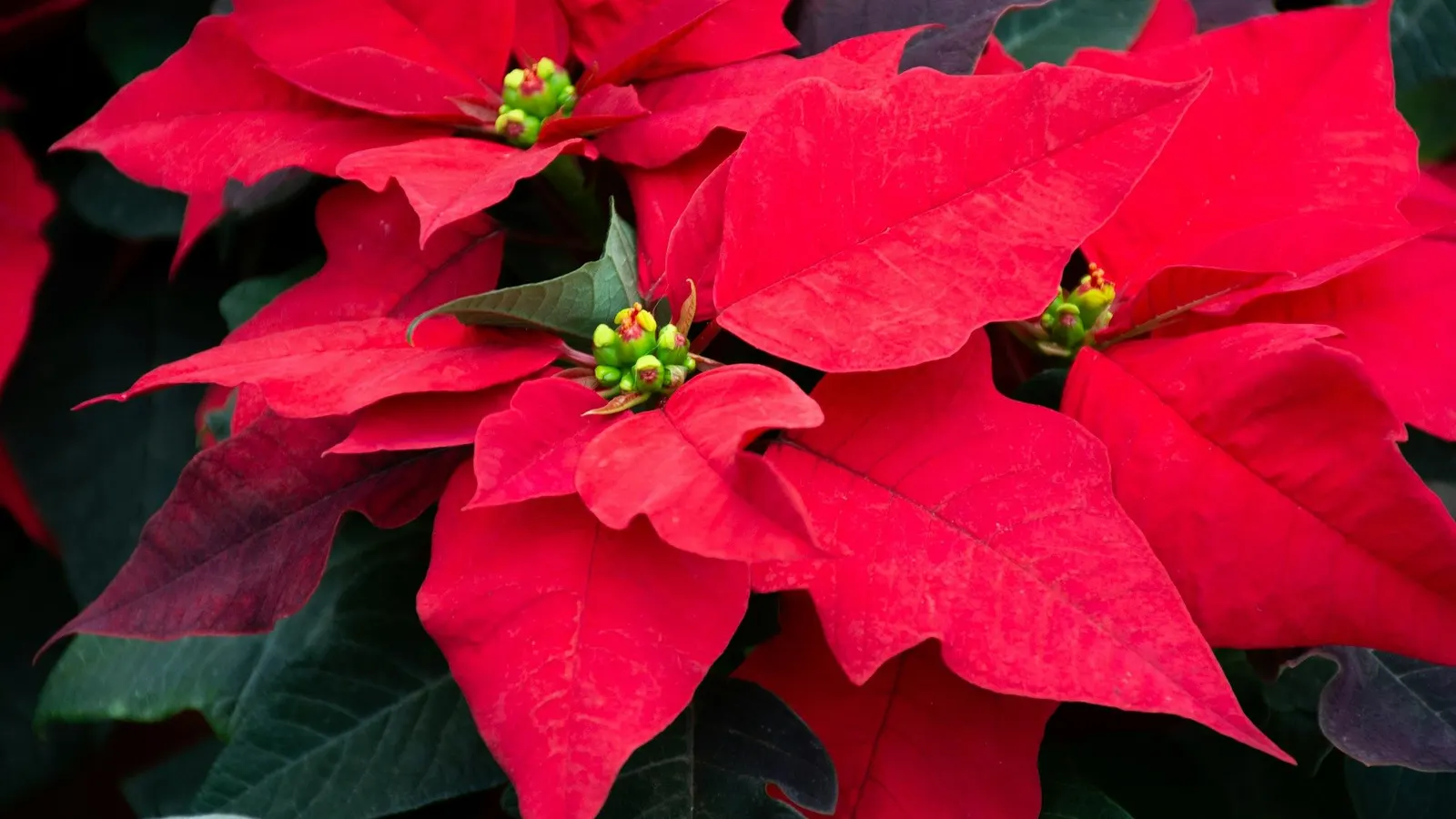
The poinsettia (Euphorbia pulcherrima) is as much a part of Christmas as the tree. But it often lasts only a few weeks before it starts dropping leaves. Usually that's not the plant's fault. It's the cold, a draft or too much water.
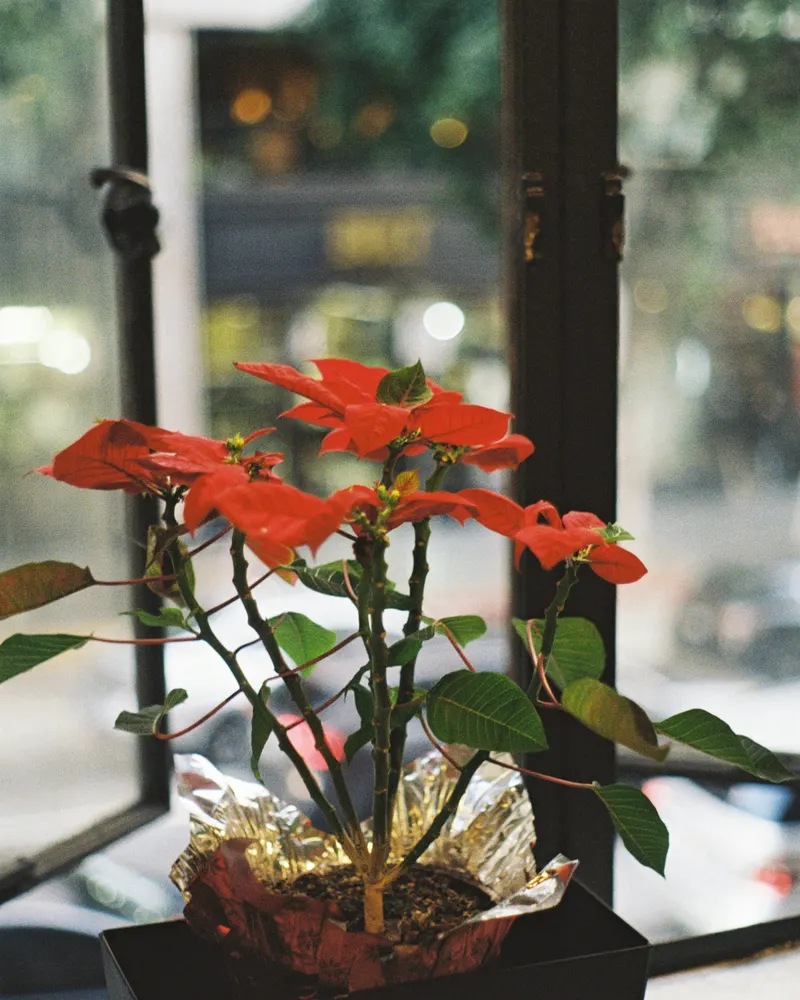
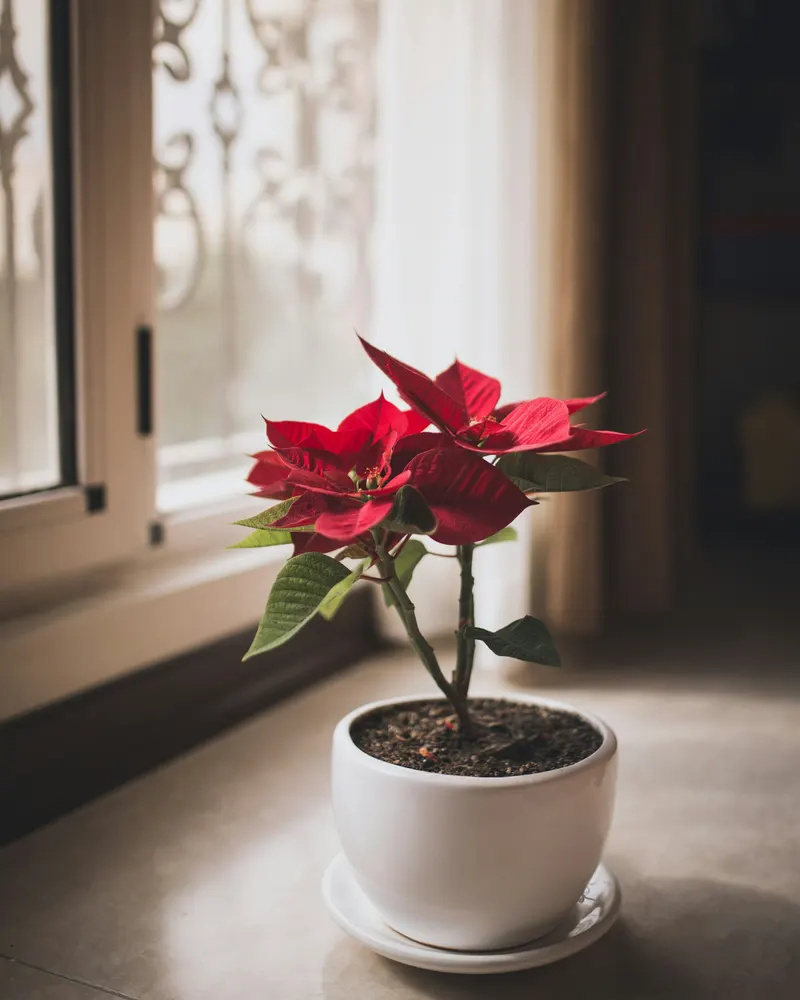
What look like red flowers are actually coloured leaves called bracts. The real flowers are the tiny yellow-green buds in the centre.
How to choose a poinsettia
Mississippi State University suggests checking these things when you buy one:
- The flowers in the centre. The small yellow-green flowers should still be closed or only partly open.
- The leaves. Dark green leaves should cover the stem down to the soil, with no wilting, fading or tears.
- Pests. Turn a few leaves over and check the undersides for whiteflies or aphids.
- The sleeve. Avoid plants that have been sitting in plastic sleeves for several days.
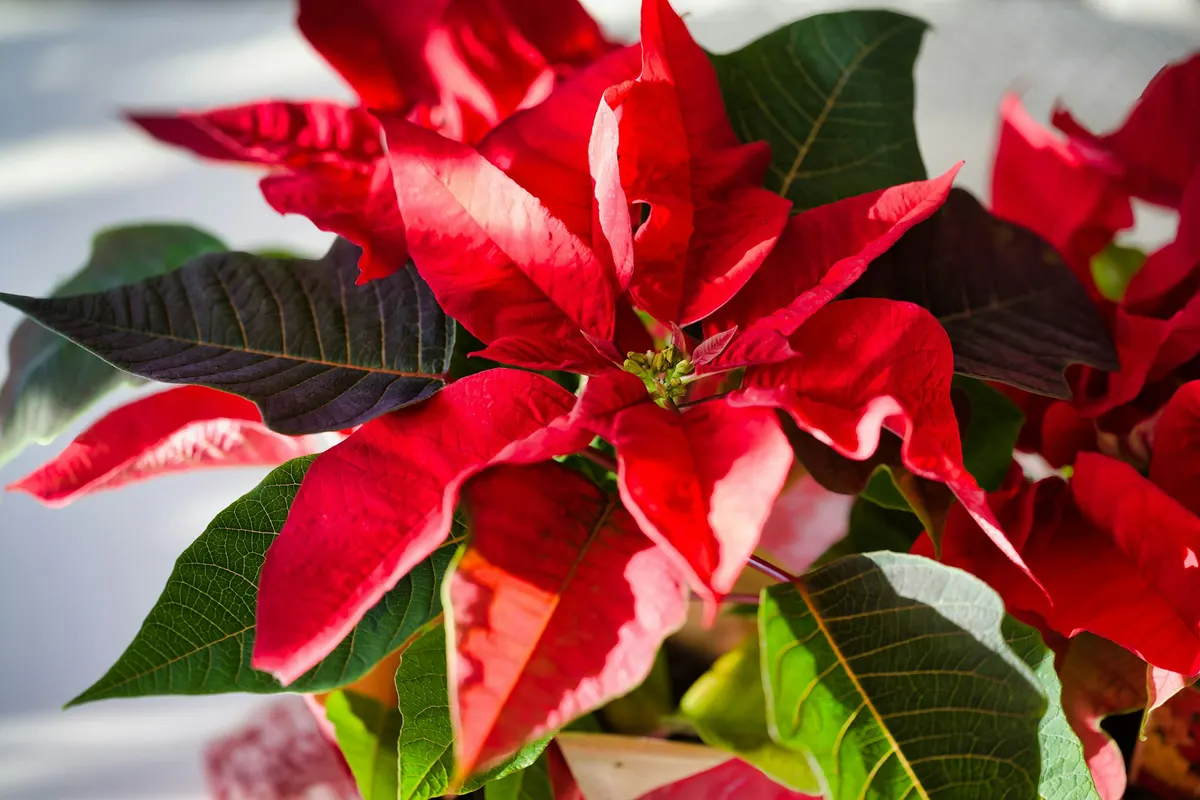
Getting it home in winter
The trip from the shop to your home is often the most dangerous part of a poinsettia's life. The University of Nebraska-Lincoln recommends:
- wrapping it in several layers of paper with some air between them, with a paper bag or a box as the last layer,
- doing your other errands first, so it doesn't sit in a cold car,
- moving it quickly from the shop to a heated car, and from the car into your home.
Once home, take it out of the wrapping. Mississippi State University recommends removing the plastic decorative wrap around the pot, or punching holes in its bottom so water can't collect in it.
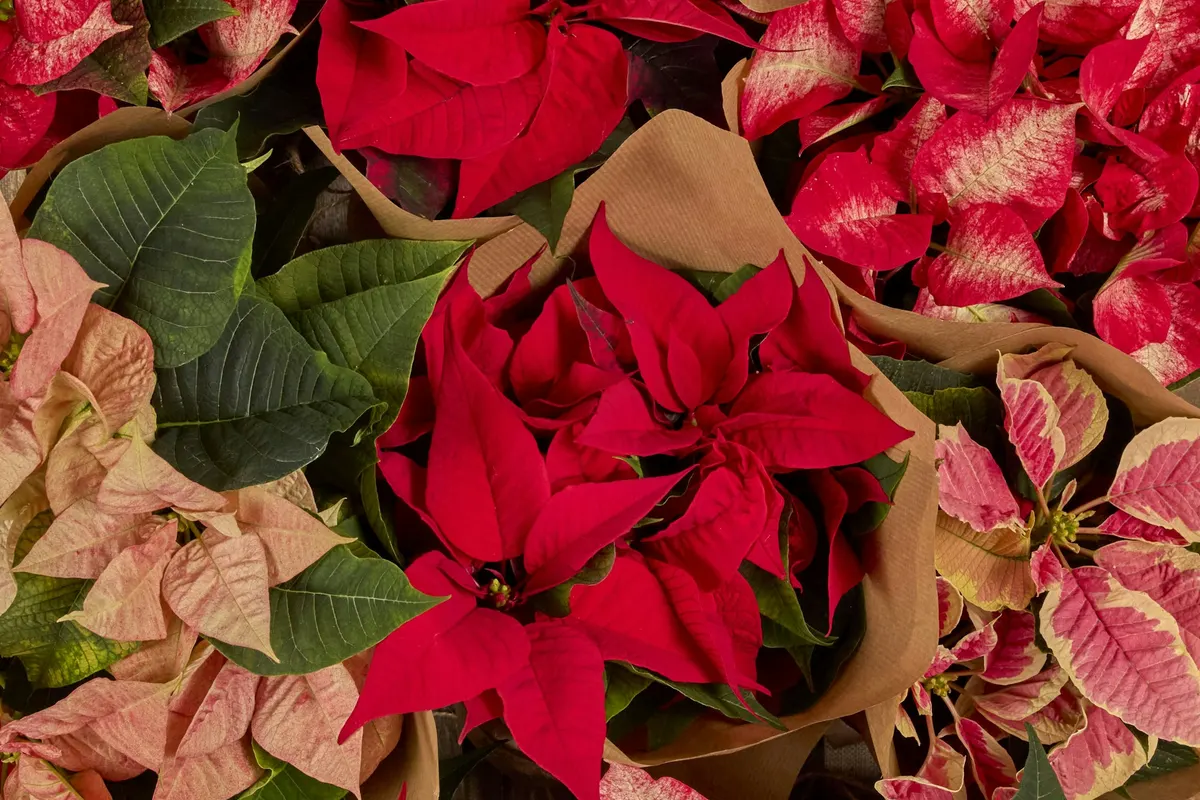
Where to put it
Poinsettias need a lot of light. According to Mississippi State University, a bright spot with indirect light suits them best. They tolerate direct sun, but will need more water and the bracts won't last as long.
The ideal temperature is 20 to 22 °C (68 to 72 °F) during the day and 16 to 18 °C (60 to 65 °F) at night. It should never drop below 10 °C (50 °F).
Keep it away from radiators, heating vents and drafts. Watch the window too: bracts that touch cold glass get damaged.
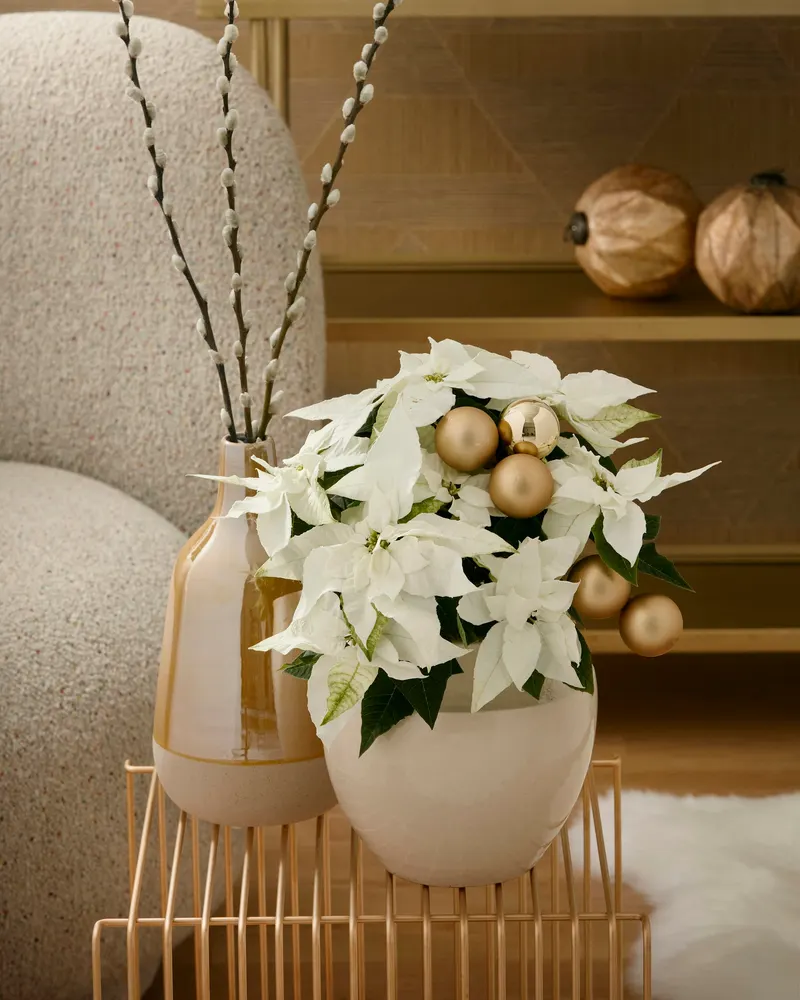
How to water it
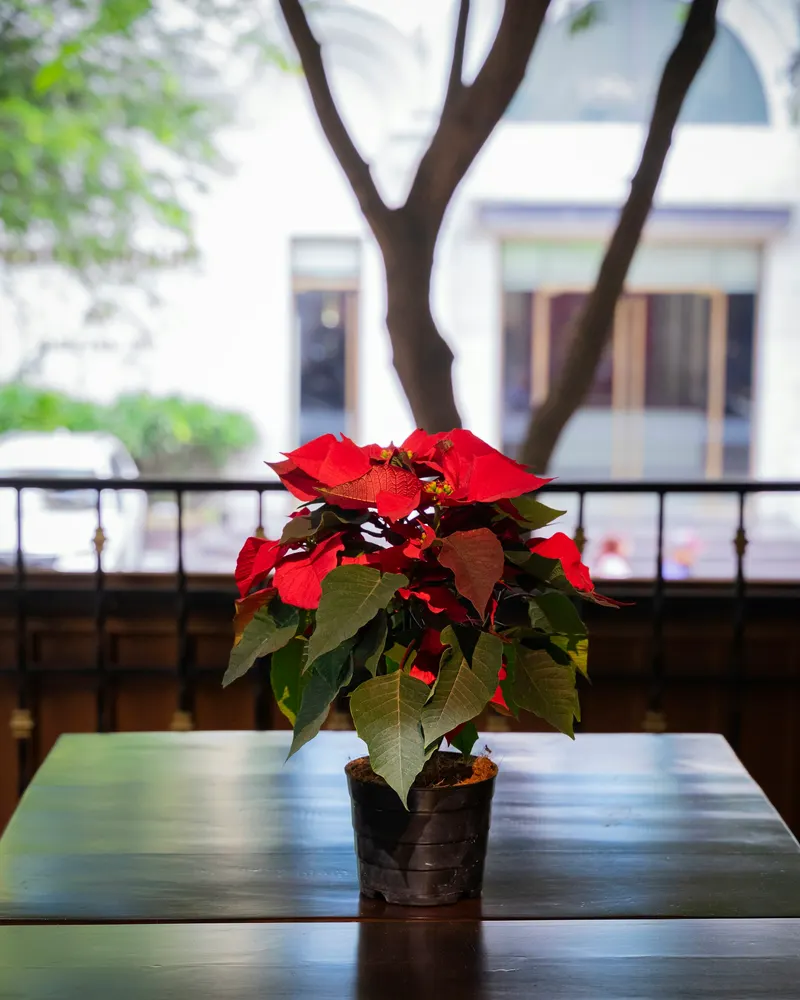
The soil should be moist but not soggy. Mississippi State University suggests watering only when the soil is dry, and then thoroughly, until water drains into the saucer. Pour off whatever collects there.
A small plant in a 10 cm (4 inch) pot dries out faster than a big one in a 15 to 20 cm pot, so check it more often.
Ohio State University also suggests lifting the pot: if it feels light, the soil is dry. We explain how to do this with any plant in How to tell when your houseplant needs water.
Why poinsettias drop their leaves
According to Mississippi State University, overwatering is the main cause of early leaf and bract drop. Watch out especially for water standing in the decorative wrap.
Cold (a chilly window, an open door, the trip home unwrapped) and hot air from a radiator or vent also do damage, which is why both universities say to keep it away from them.
If your plant is dropping leaves, first check whether the soil is wet or there's water in the wrap. Only then look at where it stands. For more winter tips, see Houseplant care in winter.
Is the poinsettia poisonous?
Less than people think. Ohio State University says poinsettias are not poisonous and that its research in the 1970s debunked the myth. It adds that it doesn't encourage anybody, person or animal, to eat them.
The ASPCA lists the poinsettia as toxic to dogs and cats, but only mildly: its milky sap irritates the mouth and stomach and sometimes causes vomiting.
Mississippi State University notes that the sap can irritate the skin or eyes of some people, so gloves are a good idea when you trim it.
For an overview of plants that are safe and unsafe for pets, read Houseplants safe for cats and dogs.
Can you get it to colour again next Christmas?
You can, but it's a lot of work and it doesn't always succeed. Mississippi State University itself says most people find it easier to buy a new plant each year. If you want to try, here's the process it describes.
Spring and summer
Once night temperatures outside stay above roughly 13 °C (55 °F), cut the plant back to 15 to 20 cm (6 to 8 inches) and repot it into a bigger pot.
Over summer, feed it every 3 to 4 weeks with a balanced fertilizer and keep the soil moist. Pinch new shoots so the plant stays compact and bushy. Stop pruning after 1 September, because later pruning delays flowering.
From 1 October: long nights
The bracts colour up when nights are long. So from 1 October the plant needs 14 hours of complete darkness every night, and 6 to 8 hours of bright light during the day.
This goes on for 7 to 10 weeks. If it all works, the bracts start colouring by late November.
The darkness has to be complete. According to Mississippi State University, even a little light from a garage lamp or an opened door can keep it from flowering by Christmas.
One way to manage this is to cover the plant with an opaque box every evening. Plants with a single stem generally don't rebloom well, according to the same source.
Sources
- Mississippi State University Extension: Selecting and Maintaining Poinsettias
- University of Nebraska-Lincoln Extension: Keep Gift Plants Under Wraps
- Ohio State University: Poinsettias: Separating fact from fiction
- ASPCA: Poinsettia