
Weeping fig dropping leaves? Why it happens and what to do
A weeping fig answers almost any change by dropping leaves. How to find out what's bothering it, and why it often gets worse first.
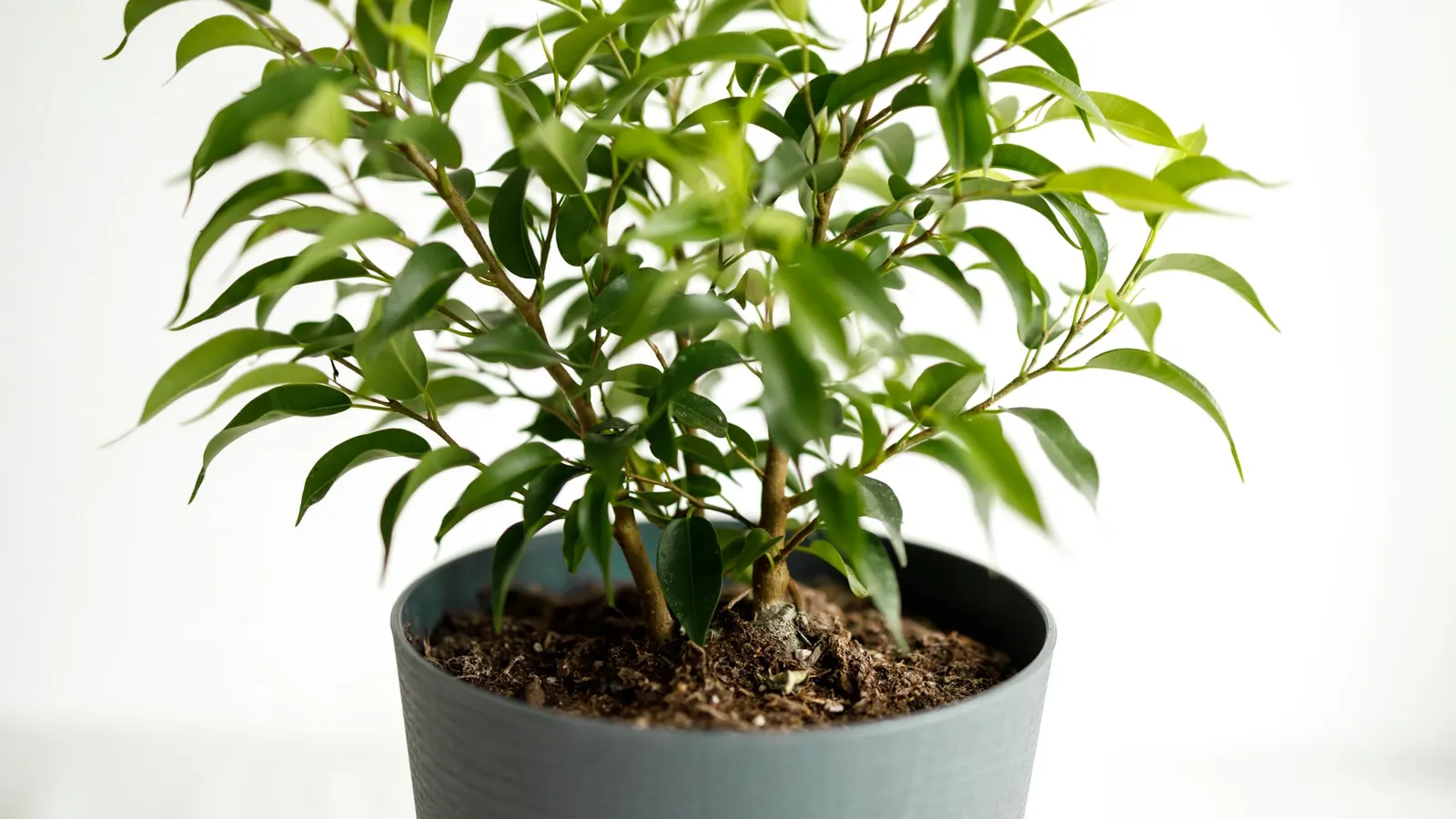
The weeping fig (Ficus benjamina) is a classic in Slovak flats. It's also known for dropping leaves at the slightest change. Clemson University calls leaf drop its most common problem.
Autumn is usually the worst time. The heating comes on, there's less light, and the plant often gets moved in from the balcony or its summer spot. The good news: once you fix the cause, it usually grows back.
Why a weeping fig drops its leaves
Weeping figs don't like change. Clemson University lists overwatering, underwatering, drafts, lack of nitrogen and low light as causes of leaf drop, and names moving or repotting as another trigger.
The New York Botanical Garden (NYBG) adds cold drafts, dry heat from heating, and sudden changes in temperature and light. It also points out something that scares people for no reason: an established tree may drop some leaves in winter after a summer of active growth, and that's a normal rest period.
So if a few leaves fall in November, it may be nothing serious. If dozens are coming down every day, go through the causes below.
The most common causes in autumn and winter
1. A new spot
Whether it's the trip home from the shop, from the balcony or just from another room, the fig notices. According to NYBG it needs a few weeks to adjust after a move, and some yellowing and leaf drop along the way is normal. Clemson says that if conditions in the new spot are good, it adapts and puts out healthy new growth.
The most important thing is to leave it alone. Moving it again in search of a better spot only drags things out.
2. Less light
Clemson recommends bright indirect light or sun filtered through a curtain. Low light is one of the causes of leaf drop on its list, and winter is when a flat gets the least of it. Put it near a window, but not above a radiator and not pressed against cold glass.
3. Radiators and drafts
When bringing it indoors for winter, Clemson advises keeping it away from heat vents and drafts. NYBG mentions both cold drafts and dry heat. In a flat that means no spot right above a radiator, and not next to a balcony door you open wide to air the room.
4. Dry air from heating
Clemson says the weeping fig prefers high humidity. Penn State Extension links yellowing and falling leaves on Ficus benjamina to low humidity and dry soil.
New Mexico State University (NMSU) suggests grouping plants, since together they raise the humidity around them. A tray of pebbles and water helps too, but keep the water below the bottom of the pot, or salts can build up in the soil. According to NMSU, misting once a day does little to raise humidity for long.
5. Too much or too little water
This is where sources differ on how dry the soil should get. NYBG calls overwatering one of the biggest problems and says to water only when the top several inches of soil are dry. Clemson recommends evenly moist soil during growth and letting it dry slightly between waterings in winter. Penn State, for leaf drop, says to keep soil moisture even.
Clemson warns that the plant should never sit in water in its saucer, and NYBG recommends well-draining soil. Tip water out of the cover pot too. In practice: water less in winter, check the soil with your finger, and tip out any water that drains through. We cover this in detail in How to tell when your houseplant needs water.
6. Pests
Clemson names spider mites and scale as frequent pests on weeping figs. Mealybugs, aphids and thrips can attack it too. NMSU warns that pests often arrive on plants from the shop or from outdoors, and suggests keeping a new plant apart from the others for a while. Check the undersides of leaves and the stems for fine webbing, sticky patches or small brown bumps.
What to do once leaves are falling
- Find it a bright spot away from radiators and drafts, then stop moving it.
- Check the soil with your finger. If it's wet, hold off on watering. If it's bone dry, water thoroughly and tip out the excess.
- Look over the leaves and stems for pests.
- Cut back or skip feeding in winter. For winter leaf drop, NYBG suggests cutting back on fertilizer and letting the plant rest.
- Be patient. NMSU notes that once leaf drop starts, it usually gets worse before it gets better.
Save repotting for late winter or early spring, as Clemson recommends. It also says the weeping fig tolerates being slightly root bound. See How to repot houseplants, step by step for how to do it.
For what happens to your other plants in winter, see Houseplant care in winter.
Is the weeping fig toxic?
Yes. ASPCA lists it as toxic to dogs, cats and horses. It contains the enzyme ficin and psoralen. RHS describes it as a skin allergen and harmful if eaten, for people and dogs.
Sources
- Clemson University HGIC: Weeping Ficus
- New York Botanical Garden: Why is my weeping ficus tree (Ficus benjamina) losing leaves?
- Penn State Extension: Ficus Diseases
- New Mexico State University: Southwest Yard & Garden, February 6, 2021
- RHS: Ficus benjamina
- ASPCA: Weeping Fig